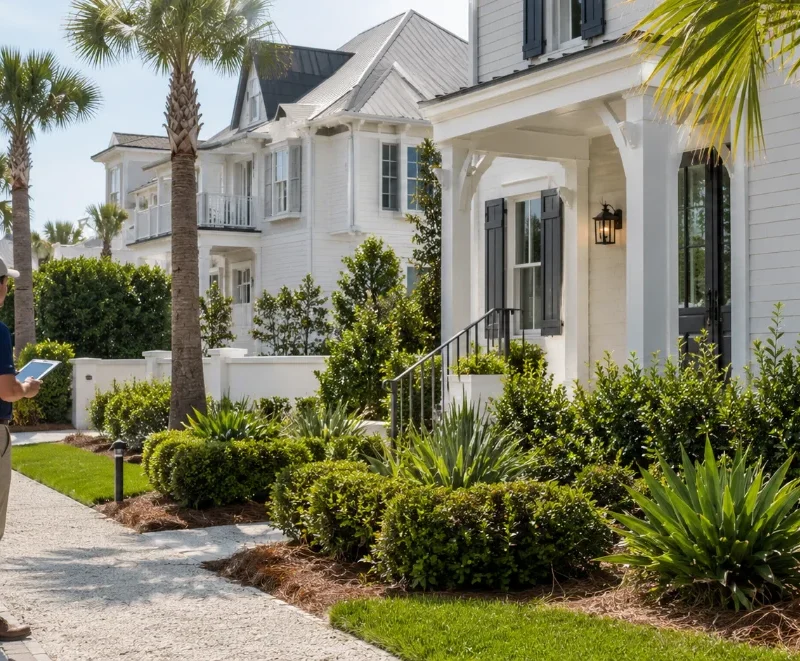
Storm Prep Landscaping 30A: A Homeowner’s Seasonal Checklist
Hurricane preparation along the Emerald Coast should begin long before a named storm enters the forecast. Effective storm prep landscaping 30A reduces loose debris, identifies hazardous trees, protects drainage, documents valuable plantings, and gives homeowners time to schedule professional work safely.
For residents, vacation rental owners, and property managers in Santa Rosa Beach, Panama City Beach, Sandestin, and surrounding 30A communities, the landscape is part of the property’s risk profile. Mature trees, palms, outdoor furniture, irrigation equipment, planters, fences, and accumulated yard debris can all be damaged or become hazards during high wind, heavy rain, storm surge, and flooding.
The goal is not to make a landscape hurricane-proof. No yard can be guaranteed against a major tropical cyclone. The goal is to reduce avoidable risks, protect healthy plants, prepare for safe cleanup, and create a clear plan for inspecting the property after the storm.
Why Storm Prep Landscaping 30A Should Start Before Hurricane Season
Hurricane season officially runs from June through November, but meaningful landscape preparation should happen before crews become overloaded and disposal sites become crowded. Tree assessments, structural pruning, drainage corrections, and major removals require time, permits, equipment, and safe working conditions.
Last-minute cutting can create more debris than the property can store or remove. It may also lead to poor pruning decisions that weaken trees instead of improving wind resistance.
Storm prep landscaping 30A works best as a year-round maintenance system. Healthy roots, good structure, correct pruning, reliable drainage, and clear access routes are developed over months and years, not during a hurricane watch.
Property owners should combine landscape preparation with household emergency plans, evacuation information, insurance documentation, and official local alerts. Landscaping is only one part of hurricane readiness.
Begin With a Professional Tree and Palm Assessment
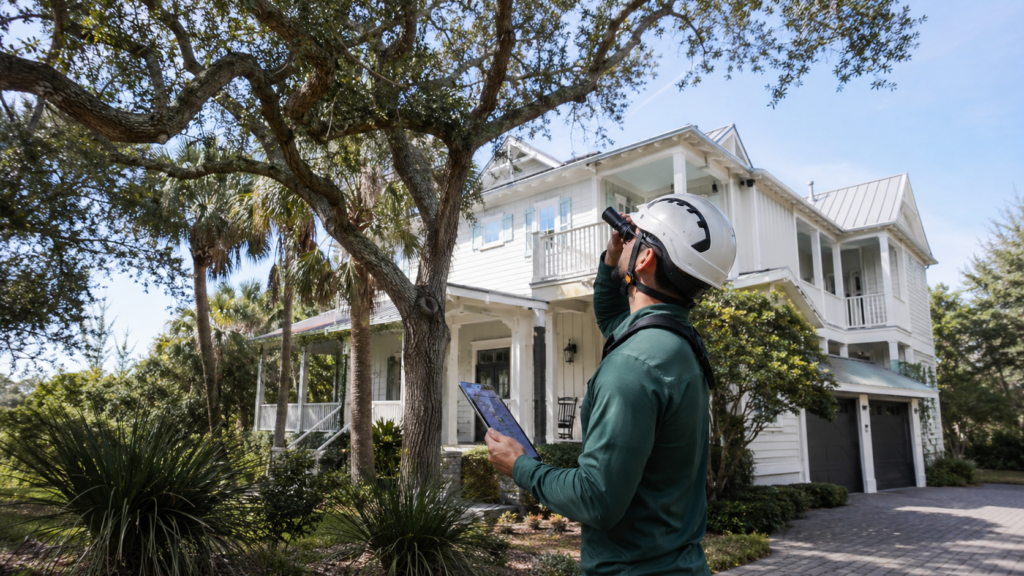
Trees are among the most valuable and potentially hazardous features on a coastal property. Tree-focused storm prep landscaping 30A begins with condition and location, not appearance alone. A qualified arborist or experienced tree-care professional should inspect mature trees for decay, cracks, cavities, weak branch unions, root damage, leaning, dead limbs, and construction injury.
UF/IFAS guidance on preparing trees for hurricanes emphasizes correct structural pruning and developing a sturdy framework of well-spaced branches around a dominant trunk.
Storm prep landscaping 30A should prioritize defects that could affect buildings, driveways, roads, power lines, walkways, pools, and neighboring property. A large tree far from structures may require a different response than a damaged tree over a bedroom or parking area.
Structural Pruning Before Storm Season
Structural pruning reduces competing stems, removes weakly attached branches, and improves the distribution of the canopy. It is most effective when started while trees are young and continued gradually.
The purpose is not to remove as much foliage as possible. Excessive thinning can stress a tree, encourage weak sprouts, increase sun exposure, and reduce the energy-producing canopy.
Tree trimming before hurricane Florida properties should be completed well ahead of a storm whenever possible. Large cuts and major crown changes should not be rushed during a warning.
Palm Pruning Without Hurricane Cuts
Palms should not be stripped into a narrow feather-duster shape. Healthy green fronds help palms produce energy and may contribute to stability.
Remove dead fronds, broken fronds, loose fruit, and other clearly hazardous material. Avoid removing green fronds simply to make the palm look prepared.
Pre-storm tree pruning Florida should follow species-appropriate practices rather than using one cutting style for every tree and palm.
Remove Loose Debris and Secure Outdoor Items
Loose objects can become dangerous projectiles in hurricane-force winds. Debris-focused storm prep landscaping 30A removes or secures them before conditions deteriorate. NOAA advises moving outdoor furniture, decorations, birdfeeders, trash bins, and similar items indoors or securing anything that cannot be moved through its guidance on preparing to reduce storm debris.
Walk the property systematically. Check patios, porches, balconies, pool decks, outdoor kitchens, garden sheds, side yards, service areas, and rental storage spaces.
Bring in or secure lightweight planters, hanging baskets, umbrellas, grills, hoses, tools, toys, temporary signs, pool accessories, small fountains, and decorative objects. Close and secure trash and recycling containers.
Storm prep landscaping 30A should also remove fallen branches, palm fronds, dead plants, empty nursery pots, loose edging, and construction scraps before wind arrives.
Create a Written Outdoor Item Checklist
A written checklist prevents important items from being missed when a storm is approaching. Organize it by area and identify where each item will be stored.
Vacation rental owners should make sure cleaners, managers, and maintenance teams know who is responsible for outdoor items. Guests should not be expected to secure an entire property without clear instructions.
Avoid Creating a Last-Minute Debris Pile
Do not schedule major tree removal or aggressive pruning immediately before expected landfall unless the work addresses an urgent hazard and debris can be removed safely.
Branches stacked at the curb can block drainage, obstruct roads, and become airborne. Seasonal landscape cleanup 30A should be completed early enough for normal collection or hauling.
Inspect Drainage, Gutters, and Low Areas
Heavy rain can damage a property even when wind damage is limited. Drainage-focused storm prep landscaping 30A keeps runoff paths visible and clear. Clogged drains, blocked swales, full gutters, buried catch basins, and poorly directed downspouts can cause localized flooding and erosion.
Clear leaves, pine straw, mulch, and debris from drainage structures. Confirm that water can move away from buildings without crossing critical walkways or entering garages.
Storm prep landscaping 30A should identify areas where bed material repeatedly washes out or standing water develops. Temporary correction may help before a storm, but recurring drainage problems usually need a designed solution.
Do not open or modify public drainage systems without authorization. Contact the appropriate association, municipality, or drainage professional when runoff crosses property boundaries or involves community infrastructure.
Protect Irrigation and Landscape Equipment
Turn off routine irrigation when heavy rain is expected. Running a normal schedule during a tropical system wastes water and may worsen saturated soil conditions.
Secure exposed controller covers, valve boxes, hoses, and removable accessories. Mark important irrigation components before flooding if they may become difficult to locate afterward.
Pumps, backflow devices, lighting transformers, and other equipment should be checked according to manufacturer instructions and electrical safety guidance.
Storm prep landscaping 30A should document controller settings and take photos before power is lost. After the storm, systems may need inspection before returning to normal operation.
Prepare High-Value and Newly Installed Landscapes
New trees and shrubs are more vulnerable because roots have not fully established. Establishment-focused storm prep landscaping 30A checks support, soil moisture, and root stability. Check stakes, ties, root-ball stability, soil moisture, and drainage well before a storm.
Stakes should support establishment without holding the trunk rigid. Loose, damaged, or poorly placed ties can rub bark and create injury.
Move container plants to a protected location. Large containers that cannot be moved should be emptied or secured if they could tip, roll, or become debris.
Storm prep landscaping 30A for newly installed areas should include photographs, plant lists, receipts, warranties, and the original design plan. Documentation helps with insurance questions, replacement estimates, and recovery decisions.
A Pre-Storm Checklist for 30A Properties
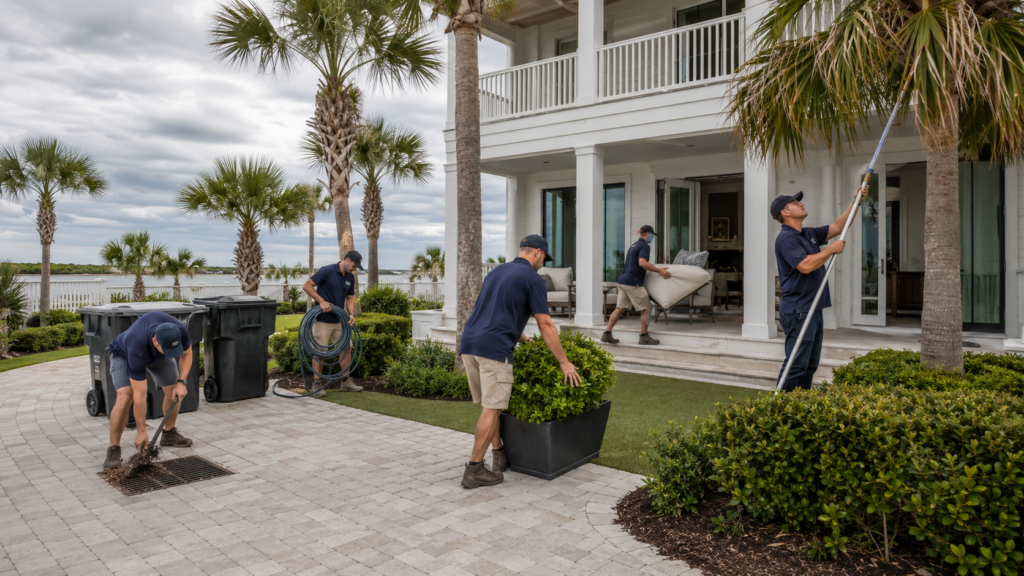
A practical checklist should be divided into work completed before hurricane season and actions taken when a storm threatens. Organized storm prep landscaping 30A makes those responsibilities easier to assign.
Several Months Before Peak Season
Schedule tree and palm inspections. Complete structural pruning, remove confirmed hazards, repair drainage, and correct irrigation problems.
Review outdoor storage capacity and update contractor contacts. Photograph valuable trees, mature landscaping, hardscape, lighting, fences, and equipment.
Storm prep landscaping 30A should also confirm HOA or community requirements for tree work, debris placement, and contractor access.
When a Tropical System Is Being Monitored
Follow official forecasts and local emergency guidance. Begin securing items early, especially at remote or rental properties.
Mow only if conditions are safe and the lawn needs it. Avoid scalping, heavy fertilization, pesticide applications, or unnecessary irrigation.
Confirm that drains are clear, gates are secured, and service areas do not contain loose materials.
When a Watch or Warning Is Issued
Stop nonessential outdoor work before conditions become hazardous. Bring workers inside and follow evacuation orders.
Do not climb trees, use ladders, operate chainsaws, or handle large branches in wind or heavy rain.
Storm prep landscaping 30A should never take priority over personal safety.
During the Storm: Stay Out of the Landscape
Once tropical-storm-force winds begin, outdoor property work should stop. Branches, power lines, roofing, signs, glass, and debris can move without warning.
Do not go outside to rescue furniture, clear a drain, or inspect a tree. Floodwater may hide electrical hazards, sharp debris, holes, and unstable ground.
Property managers should communicate that staff will not enter the site until authorities say travel is safe and conditions have been assessed.
The landscape plan matters before and after the storm. During the event, the priority is shelter, evacuation guidance, and life safety.
Post-Storm Safety Comes Before Cleanup
After the storm, wait for official clearance and check for downed power lines, damaged utilities, unstable trees, leaning walls, broken glass, flooding, and structural hazards. Safe storm prep landscaping 30A includes a controlled reentry plan.
Assume every power line is energized. Keep people, pets, crews, and equipment away until the utility confirms safety.
Storm cleanup 30A should begin with assessment, not chainsaws. A tree may look stable while hanging limbs or root failure create hidden danger.
Wear appropriate protective equipment and avoid working alone. Large trees, suspended limbs, leaning trunks, and work near utilities require qualified professionals.
Photograph Before Moving Debris
Take wide and close photographs of damage before cleanup when it is safe. Capture trees, turf, irrigation, lighting, hardscape, fences, structures, and debris paths.
Remote owners should receive organized photos with locations and recommendations. Documentation supports insurance, HOA communication, and contractor estimates.
Separate Immediate Hazards From Cosmetic Damage
Immediate hazards include blocked access, broken limbs over structures, exposed utilities, unstable trees, sharp debris, and flooding.
Cosmetic damage includes scattered leaves, minor defoliation, displaced mulch, and small broken twigs. These items can wait until urgent risks are controlled.
How to Evaluate Storm-Damaged Trees
Not every damaged tree must be removed. Some trees can recover after losing smaller branches, while others are unsafe because of trunk splits, root failure, severe lean, or extensive large-limb breakage.
A qualified arborist should evaluate valuable or questionable trees. The assessment should consider species, age, structure, roots, remaining canopy, targets, and the type of failure.
Post-storm pruning should remove broken, hanging, and clearly hazardous material while preserving as much healthy live wood as practical. Severe topping is not restoration.
Storm prep landscaping 30A plans should include the contact information for a trusted tree professional before demand surges after a major event.
Lawn, Soil, and Irrigation Recovery
Saltwater, flooding, wind, debris, equipment traffic, and prolonged saturation can damage turf and soil.
Do not fertilize immediately to force recovery. First inspect drainage, root condition, irrigation, and contamination. Water quality and salt exposure may affect the correct recovery plan.
Ruts and compaction from cleanup equipment should be addressed before sod replacement. Irrigation heads may be broken, buried, or misaligned.
Storm cleanup 30A should restore the system in the correct order: safety, drainage, debris, irrigation, soil condition, then turf and planting.
Recovery Planting After a Storm
Replacement planting should not recreate the same vulnerabilities automatically. Review why each plant failed.
A tree may have been poorly structured, planted too deeply, constrained by roots, or placed in saturated soil. Shrubs may have failed because of salt exposure or weak anchoring.
Use the recovery period to improve spacing, species selection, drainage, and maintenance access. Coastal-adapted plants may perform better in exposed areas.
Storm prep landscaping 30A becomes more effective when lessons from one event are used to strengthen the property before the next season.
Spring and Fall Seasonal Cleanup
Hurricane preparedness is part of a broader seasonal maintenance cycle. Spring cleanup prepares the property for active growth, rentals, and summer storms.
Spring tasks may include irrigation testing, pruning dead material, refreshing beds, repairing turf, removing winter debris, and inspecting trees.
Fall cleanup 30A landscaping should continue through the end of hurricane season. Remove fallen leaves and branches, maintain drainage, monitor cooler-season disease, and document storm damage that needs winter repair.
Seasonal landscape cleanup 30A also protects curb appeal between major weather events.
Vacation Rentals and Remote Owners
Remote owners need defined responsibility before a storm appears. Managed storm prep landscaping 30A gives each vendor a specific task and authorization limit. The property manager, landscape contractor, pool company, and cleaning team should know who secures each outdoor area.
Create a storm authorization policy. It should state what preventive work can be completed without waiting for owner approval, the spending limit, and how documentation will be delivered.
Outdoor property maintenance 30A reports should include before-and-after photos, unresolved risks, blocked access, and recommendations.
Storm prep landscaping 30A for vacation rentals should also account for guest communication, evacuation schedules, gate access, locked storage, and vendor arrival restrictions.
What a Pre-Storm Property Assessment Should Include
A professional assessment should review trees, palms, loose materials, drainage, irrigation, landscape lighting, fences, gates, planters, outdoor furniture, and access routes. Complete storm prep landscaping 30A documents each risk before work begins.
The report should separate routine maintenance from urgent hazards. It should explain what can be completed immediately, what requires an arborist or specialist, and what needs HOA or owner approval.
Storm prep landscaping 30A assessments should include photographs and a prioritized action list instead of vague recommendations.
Internally link this section to the outdoor property maintenance service, the lawn maintenance service, the vacation rental landscaping guide, the landscaping company guide, and the year-round lawn care article.
Common Hurricane Landscape Mistakes
The first mistake is waiting for a named storm before inspecting trees. Qualified crews may already be booked, and proper structural work cannot be rushed.
The second is over-pruning trees and palms. Removing too much healthy canopy weakens plants and creates unnecessary debris.
The third is leaving loose objects outdoors because they seem heavy. Wind can move items that are difficult for one person to lift.
The fourth is piling branches near roads, drains, or utilities. Debris can block water, access, and emergency operations.
The fifth is fertilizing damaged turf immediately after flooding or salt exposure.
The sixth is beginning cleanup before checking utilities and unstable trees.
Storm prep landscaping 30A should prevent these avoidable errors through planning and clear responsibility.
Build a Year-Round Storm-Ready Landscape
A storm-ready landscape is not created by one cleanup visit. It develops through correct pruning, healthy roots, adapted plants, reliable drainage, secure outdoor storage, and documented maintenance.
Storm prep landscaping 30A helps homeowners and property managers reduce hazards without damaging valuable trees or making rushed decisions.
The most important work happens before the forecast becomes urgent. Once warnings are issued, personal safety and official emergency guidance come first.
Schedule a pre-storm property assessment with Salty Air Landscaping to create a storm prep landscaping 30A checklist for your home or rental property.
Related posts

Landscaping Near Me 30A: How to Find and Vet a Local Company

Outdoor Property Maintenance 30A: Complete Exterior Care Beyond the Lawn

Builder Landscape Packages 30A: What New Construction Homes Need From Day One
Lawn Fertilization 30A Florida: What Your Sandy Soil Actually Needs