Outdoor Property Maintenance 30A: Complete Exterior Care Beyond the Lawn
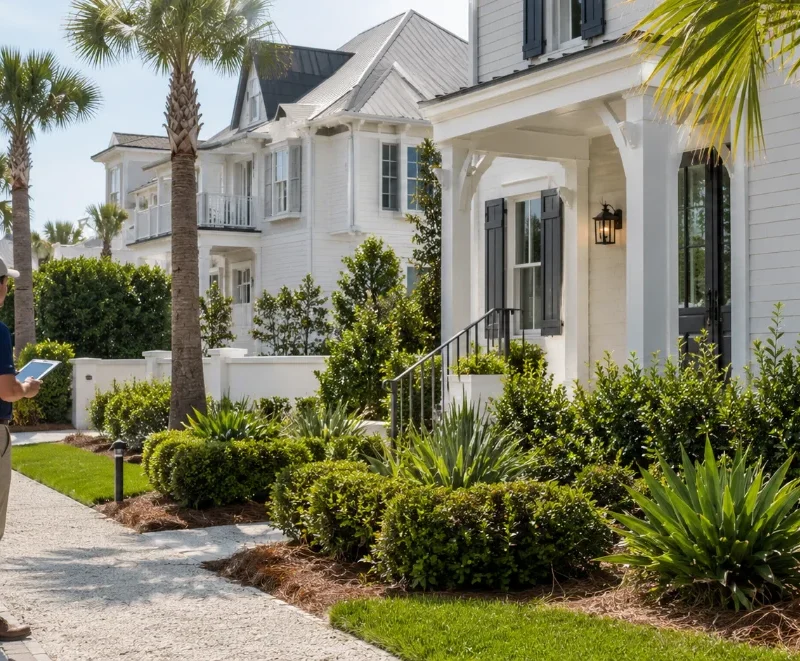
A beautiful lawn is only one part of a well-maintained coastal property. Effective outdoor property maintenance 30A also includes pressure washing, gutter and drain checks, pathway care, outdoor furniture setup, seasonal cleanup, irrigation observation, lighting inspection, and routine exterior reporting.
These details matter for homeowners, vacation rental owners, property managers, and HOA communities across 30A, Sandestin, Panama City Beach, Niceville, and Santa Rosa Beach. Salt air, humidity, sand, heavy rain, intense sun, rental turnover, and tropical weather can affect nearly every outdoor surface and system.
The goal is not to create a long list of disconnected chores. It is to build one coordinated exterior-care plan that keeps the property clean, safe, guest-ready, and easier to manage throughout the year.
Why Outdoor Property Maintenance 30A Goes Beyond Landscaping
Landscaping creates curb appeal, shade, privacy, and a sense of place. However, even a healthy yard can look neglected when gutters overflow, pathways stain, furniture remains disorganized, drains are blocked, or exterior fixtures are damaged.
Outdoor property maintenance 30A connects those tasks. A single inspection can identify an irrigation leak, a slippery walkway, loose furniture, clogged drainage, overgrown plants, and pressure-washing needs before each issue requires a separate emergency visit.
This coordinated approach is especially useful for absentee owners. Instead of relying on several contractors who only see one part of the property, the owner receives a broader view of exterior conditions.
The result is not simply a cleaner home. It is better visibility, fewer surprises, and a more consistent experience for residents and guests.
What Full Exterior Property Care Includes

A complete service plan should be based on the property rather than a generic checklist. Property-specific outdoor property maintenance 30A matches service frequency to exposure, occupancy, and risk. A beachfront rental, a primary residence, and an HOA-managed home may need very different frequencies and priorities.
Landscape and Lawn Oversight
The foundation still includes mowing, edging, pruning, bed care, turf observation, weed control, and seasonal cleanup. The difference is that landscaping is evaluated alongside the rest of the exterior.
For example, shrubs may block a drain, irrigation may stain a wall, tree debris may fill gutters, or mowing equipment may repeatedly damage a pathway edge.
Outdoor property maintenance 30A should identify those connections instead of treating every issue separately.
Pressure Washing and Surface Cleaning
Coastal humidity, shade, pollen, irrigation minerals, algae, and foot traffic can discolor driveways, patios, steps, walls, fences, and pool surrounds.
Pressure washing should match the surface. Concrete, pavers, painted siding, wood, composite decking, stucco, and natural stone require different methods, pressure levels, detergents, and precautions.
Professional exterior property care 30A should also protect plants, electrical fixtures, doors, windows, and nearby furnishings during cleaning.
Gutter and Drainage Maintenance
Gutters, downspouts, channel drains, catch basins, and swales help move water away from buildings and high-use areas. Leaves, pine straw, sand, mulch, and roof debris can block those systems.
UF/IFAS guidance on improving landscape drainage notes that gutters can direct roof water to areas that drain well and that runoff should be managed carefully around existing trees.
Outdoor property maintenance 30A should inspect drainage before the rainy season and after major storms. Clearing debris is routine maintenance; recurring standing water or erosion may require a designed correction.
Outdoor Furniture and Amenity Setup
Furniture, umbrellas, grills, planters, pool accessories, and recreational equipment affect how a property looks and functions.
A service plan may include seasonal setup, repositioning, cleaning, cover installation, storm preparation, and storage. Rental properties may also need furniture reset between guest seasons.
The goal is to keep amenities ready without leaving loose or damaged items exposed to weather.
The Value of One Reliable Exterior-Care Vendor
Coordinating several contractors can create gaps. The landscaper may notice a blocked drain but assume the property manager will handle it. The pressure-washing company may clean a patio but overlook an irrigation leak that causes the stain to return.
Outdoor property maintenance 30A creates one point of responsibility for observing the entire exterior. The provider may complete routine items directly and recommend a specialist when the work requires licensed electrical, roofing, plumbing, tree, structural, or pool expertise.
This structure reduces repeated site visits and improves communication. It also gives owners one report showing completed work, emerging concerns, and recommended next steps.
For property managers, fewer vendors can mean simpler scheduling, clearer accountability, and easier access coordination.
Exterior Inspections That Prevent Expensive Surprises
Routine inspections are among the highest-value parts of outdoor property maintenance 30A. Preventive outdoor property maintenance 30A makes small defects visible before they become disruptive. Small problems are often inexpensive when identified early.
A loose paver can become a trip hazard. A clogged drain can contribute to flooding. A minor irrigation leak can stain walls and undermine soil. A damaged fence latch can create a pool-safety concern.
A useful inspection should document the location, severity, recommended action, urgency, and photographs. It should separate maintenance items from repairs requiring approval or a specialist.
Monthly Visual Checks
Monthly checks may cover landscape condition, irrigation leaks, lighting, pathways, drains, gates, fences, furniture, trash areas, exterior cleanliness, and storm debris.
High-use vacation homes may need more frequent checks during peak season.
Seasonal Deep Inspections
Seasonal inspections should look more closely at gutters, drainage, pressure-washing needs, tree condition, furniture storage, irrigation programming, exterior caulking visibility, and storm readiness.
Outdoor property maintenance 30A becomes more effective when those inspections follow a documented calendar.
Pressure Washing Without Damaging the Property
Pressure washing can quickly improve curb appeal, but aggressive cleaning may etch concrete, damage paint, force water behind siding, strip wood, or disturb joint sand. Careful outdoor property maintenance 30A uses the least aggressive effective method.
The surface should be tested in an inconspicuous location. Cleaning methods should consider age, coating, material, stains, and nearby landscaping.
Wash water should not be directed into storm drains or water bodies when it contains detergents, sediment, paint particles, oils, or other contaminants. EPA pollution-prevention guidance recommends protecting storm drains during outdoor washing activities.
Outdoor property maintenance 30A should coordinate pressure washing with landscaping. Plants may need pre-wetting, protection, and rinsing, while movable furniture and decorative items should be cleared first.
After cleaning, the property should be inspected for areas that need sealing, repair, re-sanding, or improved drainage.
Gutter Cleaning and Roofline Observation
Gutters can fill with pine needles, leaves, roofing granules, seed pods, and windblown debris. Seasonal outdoor property maintenance 30A keeps those systems visible and serviceable. Overflow may stain walls, erode beds, saturate foundations, and create slippery areas.
A gutter service should include safe debris removal, downspout flow checks, and observation of visible damage. Loose fasteners, separated joints, and poor discharge locations should be reported.
Outdoor property maintenance 30A should not treat roof work casually. Steep roofs, fragile materials, electrical hazards, and elevated access may require a properly equipped specialist.
Ground-level reporting is still valuable. Water marks, washed-out mulch, plant decline, and repeated puddles often reveal that roof runoff is not being managed correctly.
Pathway, Driveway, and Paver Maintenance
Walkways and drives are part of the guest experience and the property’s safety system. Guest-ready outdoor property maintenance 30A includes regular pathway observation and cleanup. Sand, algae, weeds, settling, broken edges, and poor drainage can make them look neglected or become hazardous.
Routine care may include blowing, sweeping, weed removal, spot cleaning, joint observation, and reporting loose or sunken units.
Paver repairs should address the cause of movement. Simply adding sand may not correct poor base preparation, erosion, roots, or drainage.
Outdoor property maintenance 30A should keep paths clear of overgrown plants and maintain visibility around steps, transitions, and lighting.
Drainage Problems Need More Than Cleanup
Clearing a drain solves a blockage, but it does not solve poor grading or undersized drainage. Recurring water near foundations, garages, pools, and walkways needs technical assessment.
Look for erosion channels, washed-out beds, exposed roots, standing water, algae, and soil settlement. Photograph conditions during or immediately after rain when possible.
Outdoor property maintenance 30A reports should explain whether the issue appears to be debris, irrigation, roof runoff, hardscape grade, or a broader drainage problem.
A coordinated provider can keep drains clear while helping the owner decide when landscape design, grading, plumbing, or civil expertise is needed.
Outdoor Lighting and Visible Electrical Concerns
Landscape lighting improves safety, navigation, and nighttime appearance. Fixtures can shift, become covered by plants, collect water, or stop working.
Routine exterior care may include cleaning lenses, repositioning low-voltage fixtures, trimming vegetation around lights, and reporting outages.
Loose wires, damaged transformers, exposed connections, and line-voltage work should be handled by qualified professionals.
Outdoor property maintenance 30A should document lighting problems before guests arrive rather than waiting for a nighttime complaint.
Seasonal Decorating, Setup, and Removal
Seasonal decorations can enhance a home, but installation and removal require planning. Hooks, cords, ladders, timers, and storage need to be managed safely.
A maintenance plan may include removing holiday lighting, storing decorations, resetting furniture, and restoring beds or surfaces affected by installations.
Outdoor maintenance beach homes should also account for wind. Lightweight decor, wreaths, banners, and temporary displays may need stronger attachment or earlier removal.
Outdoor property maintenance 30A keeps seasonal changes from turning into leftover clutter or damaged landscaping.
Vacation Home Property Maintenance Florida Owners Need

Vacation homes experience concentrated use. Rental-focused outdoor property maintenance 30A responds to turnover, weather, and repeated guest traffic. Guests move furniture, carry beach equipment, park in unexpected areas, use outdoor showers, and create wear around pools and entrances.
A rental-focused plan should inspect the property between high-use periods and coordinate with cleaners, pool companies, and managers.
Exterior reports may cover furniture placement, gates, lighting, pathways, trash areas, drains, irrigation, landscape appearance, and visible damage.
Outdoor property maintenance 30A gives remote owners a practical set of eyes on the property without asking a cleaning crew to evaluate landscaping or drainage
HOA and Community Property Standards
Managed communities may regulate exterior cleanliness, plant appearance, tree work, furniture visibility, trash storage, lighting, drainage, and maintenance timelines.
A broad property-care provider can identify issues before they become violation notices. It can also document corrections and coordinate routine work around community access rules.
Outdoor property maintenance 30A should still use the current governing documents for each property. Standards in Sandestin, WaterColor, Seaside, Alys Beach, and other communities may differ.
Internally link this section to the HOA landscaping article and the appropriate service page.
Storm Preparation and Post-Storm Cleanup
Storm readiness is a core part of exterior maintenance on the Emerald Coast. Loose furniture, planters, branches, clogged drains, and unsecured items should be addressed before tropical weather.
After a storm, the property should be checked for utilities, unstable trees, blocked access, flooding, irrigation damage, fence damage, and debris.
Outdoor property maintenance 30A should follow a defined storm protocol with authorization limits, emergency contacts, and photo reporting.
The storm-preparation guide can provide a more detailed checklist, while this service coordinates ongoing readiness throughout the year.
A Seasonal Outdoor Property Maintenance 30A Calendar
A calendar keeps important tasks from being forgotten and helps owners budget throughout the year. Scheduled outdoor property maintenance 30A also reduces last-minute service requests.
Spring
Inspect irrigation, clean winter debris, refresh beds, prepare furniture, examine pathways, and schedule pressure washing where needed.
Review gutters and drainage before summer rainfall. Check outdoor lighting and repair visible landscape damage.
Summer
Monitor fast plant growth, irrigation performance, algae, rental wear, drains, and storm preparation. Keep paths clear and furniture organized.
Outdoor property maintenance 30A may need more frequent reporting during peak rental occupancy.
Fall
Continue hurricane-season readiness, remove storm debris, inspect gutters, adjust irrigation, and plan seasonal setup or removal.
Document drainage issues during heavy rain so repairs can be planned during drier weather.
Winter
Reduce irrigation and mowing according to conditions. Complete selective cleaning, furniture care, pruning, lighting checks, and annual planning.
Use the slower season for repairs that are difficult during peak occupancy.
How Reporting Should Work for Remote Owners
A report should be clear enough to understand without visiting the property. Documented outdoor property maintenance 30A gives remote owners useful evidence instead of vague reassurance. It should include date, completed tasks, photographs, concerns, urgency, estimated next step, and whether owner approval is needed.
Reports should avoid vague phrases such as “yard needs work.” Identify the exact area and condition.
Outdoor property maintenance 30A reporting can also track recurring issues. If the same wall stains after every cleaning, the owner may need an irrigation or drainage correction rather than another wash.
Property managers benefit when reports are easy to forward to owners and attach to maintenance records.
What Should Remain With Licensed Specialists
A full-service exterior-care company can coordinate a wide range of work, but it should recognize professional boundaries.
Roof repair, structural work, line-voltage electrical work, major plumbing, hazardous tree removal, pool systems, gas equipment, and regulated pesticide applications may require specialized licensing, certification, or insurance.
Outdoor property maintenance 30A should make those referrals clear rather than attempting work outside the provider’s scope.
A trustworthy vendor adds value by identifying the right next step, even when another specialist must complete it.
Common Exterior Maintenance Mistakes
The first mistake is waiting until a guest or HOA reports a problem. Routine inspections should catch visible issues earlier.
The second is hiring a different company for every small task without one person reviewing the whole property.
The third is pressure washing too aggressively or allowing contaminated wash water to enter drainage systems.
The fourth is repeatedly cleaning stains without correcting irrigation, gutter, or drainage causes.
The fifth is leaving furniture, decor, and outdoor accessories exposed during severe weather or long vacancies.
The sixth is treating outdoor property maintenance 30A as landscaping only.
Choosing a Full-Service Property Maintenance Partner
Ask how the company documents inspections, manages recurring schedules, communicates with remote owners, and handles urgent conditions.
Confirm which services are performed directly and which are referred to specialists. Review insurance, access procedures, reporting, authorization limits, and storm protocols.
A strong provider should understand landscaping, outdoor surfaces, drainage observation, guest-facing presentation, and managed-community expectations.
Outdoor property maintenance 30A should reduce the owner’s workload rather than create another vendor that needs constant supervision.
Internally link this section to the outdoor property maintenance service, the lawn maintenance service, the vacation-rental landscaping guide, HOA landscaping article, and irrigation guide.
One Plan for the Entire Exterior
A coastal property is a connected system. Landscaping affects gutters and drains. Irrigation affects walls and walkways. Trees affect roofs, furniture, and seasonal cleanup.
Outdoor property maintenance 30A brings those connections into one practical plan. Owners receive cleaner spaces, safer access, better documentation, and earlier warning when a specialist is needed.
For remote owners and property managers, the greatest benefit is confidence that someone is checking the entire exterior rather than one isolated service area.
Get a full property maintenance quote from Salty Air Landscaping for coordinated exterior care throughout the year.
Related posts

Landscaping Near Me 30A: How to Find and Vet a Local Company
Storm Prep Landscaping 30A: A Homeowner’s Seasonal Checklist

Builder Landscape Packages 30A: What New Construction Homes Need From Day One
Lawn Fertilization 30A Florida: What Your Sandy Soil Actually Needs