Coastal Landscaping in 30A: Why Salt Air, Sandy Soil & Beach Weather Demand a Different Approach
Most homeowners who move to 30A — or buy a vacation property here — quickly realize that the landscaping advice they got back home doesn’t apply. What worked in Atlanta, Houston, or even Orlando doesn’t translate to the Emerald Coast. The environment along this stretch of Northwest Florida is specific, demanding, and completely unforgiving of generic lawn care decisions.
Coastal landscaping in 30A means working with conditions that most landscaping companies have never dealt with: relentless salt air off the Gulf, sugar-white sand that drains faster than almost any other soil type in the state, heat and humidity that runs six months strong, and a subtropical storm season that can undo a full season of growth in a single afternoon. Add HOA standards, vacation rental curb appeal expectations, and water management restrictions — and you start to understand why local expertise isn’t optional here. It’s everything.
This guide breaks down the real challenges of landscaping along 30A and the Emerald Coast, and explains what actually works — from plant selection and soil prep to irrigation scheduling and seasonal maintenance.
The 30A Landscape Environment: What You’re Actually Working With
Before you can make good decisions about plants, irrigation, or maintenance schedules, you need to understand what makes this environment distinct. These aren’t minor quirks — they’re conditions that fundamentally shape what will survive and what won’t.
Soil That Looks Like a Beach — Because It Is
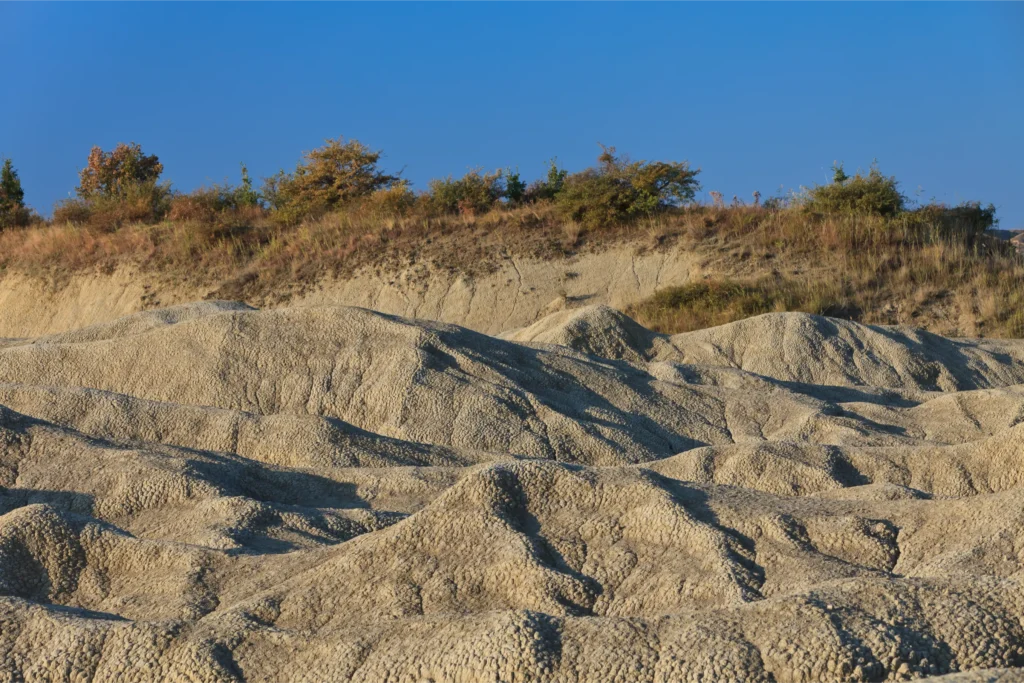
The soil throughout most of 30A is effectively coastal sand. It’s low in organic matter, extremely well-draining, and has almost no natural capacity to hold moisture or nutrients. Rain and irrigation water move through it quickly, which means anything you apply to the surface — fertilizer, water, soil amendments — has a short window before it’s gone.
For homeowners used to clay or loam soils, this requires a complete recalibration. Irrigation systems that worked beautifully inland will leave your lawn dry in sandy Emerald Coast soil. Fertilization schedules designed for nutrient-retentive soil will underfeed 30A turf. And plants that rely on moisture retention to establish their root systems will struggle without careful management in the first growing season.
The fix is a combination of approaches: soil amendment during installation to improve water and nutrient retention, consistent mulching to reduce surface evaporation, proper irrigation calibration, and a fertilization schedule timed to account for the faster leach rate.
Salt Air: The Silent Plant Killer
Properties within a few blocks of the Gulf — which covers most of 30A, from Inlet Beach to Blue Mountain Beach — deal with ongoing salt spray and salt-laden wind. This isn’t just a coastal-adjacent problem. On days with strong onshore winds, salt can travel well inland, coating foliage and depositing on soil.
Salt stress on plants shows up as leaf tip burn, yellowing, stunted growth, and in severe cases, outright plant death. It accumulates gradually, which means a plant installed in spring might look fine through summer and start declining in fall — leading homeowners to blame drought or disease when salt damage was the real culprit all along.
Selecting plants with genuine salt tolerance is the first line of defense. Rinsing foliage during extended dry and windy stretches, and ensuring proper irrigation to dilute soil salt concentration, are maintenance practices that make a real difference for coastal properties.
Heat, Humidity, and Fungal Pressure
Northwest Florida summers are long and humid. That combination creates ideal conditions for fungal diseases in turf and ornamental plants. Gray leaf spot in St. Augustine grass, brown patch fungus, and various root rots are common throughout 30A from late spring through early fall — especially when irrigation schedules are poorly calibrated or when there’s poor airflow through dense plantings.
Managing fungal pressure requires the right mowing height, proper irrigation timing (watering in the early morning, not at night), good airflow through landscape beds, and in some cases, a preventative fungicide program. Overwatering in sandy soil creates a counterintuitive problem: waterlogged surface conditions that encourage fungal growth even though the root zone is draining well below.
Hurricane Season and Storm Prep
Living or investing along the Gulf Coast means taking storm preparation seriously as a landscaping consideration — not just a property safety one. Overgrown trees and unsecured plants become projectiles in high winds. Root systems weakened by disease or poor soil conditions are the first to topple. Heavy plantings against structures create damage risk.
A well-managed coastal landscape in 30A accounts for seasonal storm prep: properly pruning trees to reduce wind resistance, selecting low-profile native plantings that flex with storm winds rather than breaking, and avoiding over-planting dense species near the home’s foundation or roofline. After a storm, cleanup and damage assessment are part of the ongoing maintenance cycle.
Best Plants for 30A Homes: What Actually Survives Here
Plant selection is where coastal landscaping decisions get made or broken. There’s no shortage of beautiful plants that look great at the nursery and struggle within a season on an Emerald Coast property. The following are species that are proven performers in 30A’s specific conditions — salt-tolerant, heat-resilient, and adapted to sandy coastal soil.
Turf Grasses
- St. Augustine (Floratam, Palmetto, CitraBlue) — the most widely used turf along 30A. Handles heat, salt exposure, and partial shade. Requires consistent irrigation and fertilization in sandy conditions.
- Zoysia (Empire, Emerald, Zenith) — denser texture, slightly lower maintenance than St. Augustine in full sun. Good salt tolerance. Slower to establish but durable once rooted.
- Seashore Paspalum — the highest salt tolerance of any warm-season turf grass. Excellent for properties very close to the Gulf or in areas where irrigation water has elevated salinity.
Native and Salt-Tolerant Trees
- Sand Live Oak (Quercus geminata) — the workhorse of coastal 30A landscapes. Wind-resistant, salt-tolerant, and evergreen. Provides structure and shade without the brittleness of faster-growing species.
- Southern Magnolia — a classic for larger properties with room for canopy. Salt-tolerant once established.
- Wax Myrtle — fast-growing, native, and excellent for screening. Handles salt air and wet or dry conditions with equal resilience.
- Yaupon Holly — a native that thrives in sandy coastal conditions with almost no supplemental care once established.
Ornamental Grasses and Groundcovers
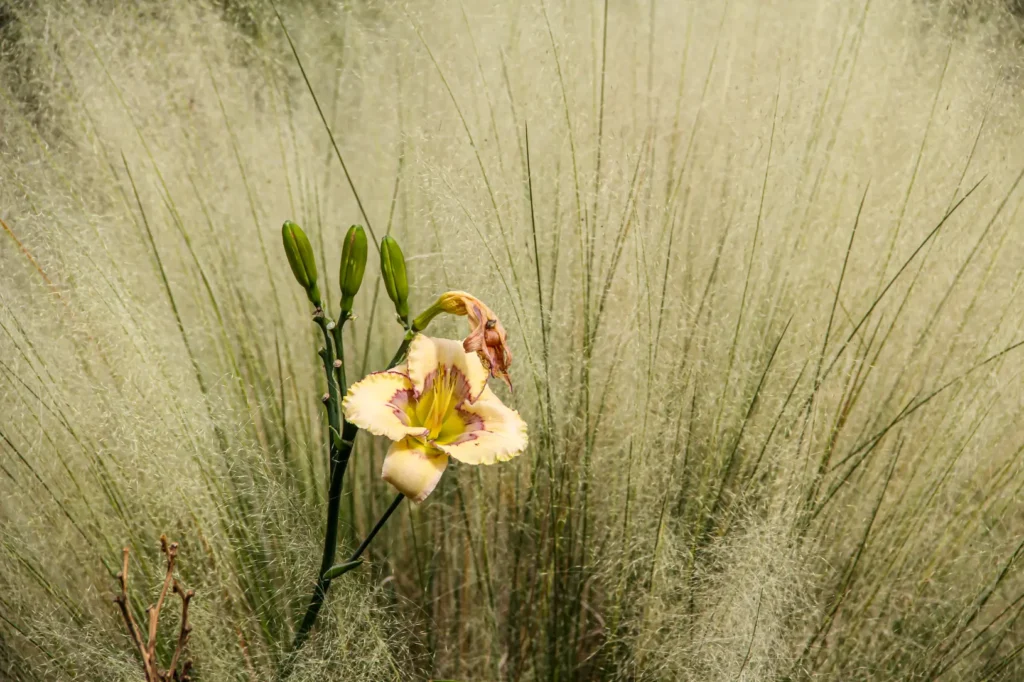
- Muhly Grass (Muhlenbergia capillaris) — one of the most reliably beautiful native grasses for 30A properties. Pink-purple fall plumes, drought-tolerant, salt-tolerant, and low-maintenance.
- Sea Oats (Uniola paniculata) — the signature plant of Gulf Coast dunes. Excellent for dune stabilization and naturalistic designs close to the water.
- Liriope (Liriope muscari) — a workhorse groundcover for shaded beds. Handles salt, drought, and poor soil.
- Lantana — heat-loving, drought-tolerant, and salt-tolerant. Aggressive bloomer with minimal care. Excellent for sunny beds near structures.
Flowering Shrubs and Foundation Plants
- Crinum Lily — a 30A favorite with large fragrant blooms, exceptional salt tolerance, and near-zero maintenance once established.
- Indian Hawthorn (Rhaphiolepis indica) — compact evergreen shrub with white or pink spring blooms. Salt and drought tolerant, HOA-friendly profile.
- Agapanthus (Lily of the Nile) — striking blue-purple blooms in summer, handles salt air and sandy soil well in full sun to partial shade.
- Bougainvillea — a high-impact flowering vine or shrub for sunny exposures. Extremely drought-tolerant once established, handles coastal conditions well with some wind protection.
Florida-Friendly Landscaping: The Principles That Guide Smart Coastal Design
Florida’s Florida-Friendly Landscaping program establishes nine principles for sustainable, resilient landscape design across the state. Along 30A and the Emerald Coast, these principles aren’t just good environmental practice — they’re practical guidelines that produce landscapes that require less maintenance, use less water, and hold up better in coastal conditions.
- Right plant, right place — matching species to your specific site conditions (sun, soil, drainage, salt exposure) is the single most impactful decision you’ll make.
- Water efficiently — calibrated irrigation systems, proper scheduling, and drought-tolerant plant selection reduce water use and protect against the overirrigation problems that cause fungal issues in humid coastal climates.
- Fertilize appropriately — in sandy soil, a calibrated, slow-release program prevents nutrient leaching into waterways while keeping turf and plants healthy.
- Mulch — a 2–3 inch layer of mulch over landscape beds reduces evaporation, moderates soil temperature, suppresses weeds, and slowly improves soil organic matter over time.
- Manage yard pests responsibly — integrated pest management reduces chemical inputs while staying ahead of the turf diseases and insect pests common to Northwest Florida.
- Reduce stormwater runoff — planted areas, permeable surfaces, and proper grading help manage the heavy rain events that 30A sees during summer storm season.
Landscapes designed around these principles tend to look better over time, not worse — because they’re working with the environment rather than fighting it.
Irrigation in Sandy Coastal Soil: Why Your System Probably Needs Recalibration
The single most common irrigation mistake on 30A properties is running the same schedule year-round, or running schedules calibrated for non-sandy soil. In Emerald Coast conditions, this typically results in one of two problems: underwatering during summer heat stress, or overwatering during cooler, wetter periods — sometimes both, in different zones of the same system.
Sandy soil requires more frequent but shorter irrigation cycles — sometimes called cycle-and-soak — rather than long, infrequent watering. This approach matches the soil’s fast drainage rate and delivers water to the root zone without creating surface puddling or runoff.
Irrigation heads also need regular inspection along the coast. Salt-laden air corrodes components faster than inland environments. Clogged nozzles, stuck rotors, and leaking valve seals are common — and they’re responsible for both wasted water and dry spots that homeowners often misattribute to disease or soil problems.
Northwest Florida’s water management district maintains seasonal irrigation restrictions, and many communities along 30A have additional HOA-level guidelines. A properly programmed and calibrated system protects you from fines and keeps your water bill where it should be. If you haven’t had your irrigation system assessed by a local professional familiar with coastal soil conditions, it’s worth doing before summer heat arrives.
Seasonal Landscape Maintenance Along 30A: What to Do and When
The Emerald Coast’s climate doesn’t follow a traditional four-season pattern. The growing season is long, the transition periods are short, and winter maintenance requirements — while reduced — don’t disappear entirely. Here’s a practical seasonal breakdown for 30A properties.
Spring (March – May)
- Fertilize warm-season turf as temperatures consistently reach the mid-60s
- Refresh mulch in beds to 2–3 inch depth before summer heat
- Prune any winter damage from shrubs and ornamentals
- Inspect irrigation system for winter damage, clogged heads, and correct seasonal programming
- Install new plantings before summer heat stress peaks — spring is the optimal window for establishment
- Apply pre-emergent weed control in turf before weed germination window
Summer (June – September)
- Maintain proper mowing height — higher in summer stress periods to protect root systems
- Monitor for gray leaf spot, brown patch, and other fungal diseases in St. Augustine turf
- Apply second fertilizer application in late June or early July
- Watch for chinch bug damage in St. Augustine — a common summer pest along 30A
- Adjust irrigation scheduling as summer rains begin — avoid overwatering during wet periods
- Storm prep: assess tree structure, secure or remove vulnerable plants ahead of tropical weather
Fall (October – November)
- Apply late-season fertilizer to support root development heading into cooler months
- Cut back ornamental grasses if not leaving for winter interest
- Plant cool-season annuals (pansy, snapdragon, dianthus) for winter color in beds
- Reduce irrigation frequency as temperatures drop and evapotranspiration decreases
- Assess overall landscape health before the quieter winter months
Winter (December – February)
- Maintain minimal mowing schedule as warm-season grasses slow or go dormant
- Protect cold-sensitive tropicals during the occasional frost event — 30A does see brief freezes
- Winter is the best time for dormant pruning of larger trees and shrubs
- Irrigation winterization — check and drain systems during freeze warnings
- Plan any major landscape renovations or new installations for spring execution
Why Generic Lawn Care Falls Short on the Emerald Coast
It’s worth being direct about this: many of the landscaping challenges that homeowners face along 30A trace back to one root cause — hiring a company that applies a standard Florida lawn care template to a coastal environment that requires something more specific.
A fertilization program calibrated for clay-heavy North Florida soils will underperform in Santa Rosa Beach’s sand. An irrigation schedule designed for a typical Pensacola property won’t account for the faster drainage and higher salt exposure in a beachside Rosemary Beach yard. Plant selections made from a catalog of popular Florida ornamentals won’t hold up the way salt-tolerant native species will in a yard four blocks from the Gulf.
The difference between a landscape that looks great at installation and one that looks great five years later is almost always local knowledge. Knowing which species establish well in 30A’s sandy soil. Knowing how to calibrate irrigation for coastal drainage rates. Knowing which HOA communities require specific plant palettes, and which ones will flag non-compliant mulch before you’ve even unpacked.
That’s what coastal landscaping expertise along 30A actually means in practice — and it’s the foundation of everything Salty Air Landscaping & Maintenance does for homeowners, vacation rental operators, and property investors across the Emerald Coast.
Frequently Asked Questions
1. What are the best plants for coastal landscaping in 30A, Florida?
For turf, St. Augustine and zoysia grass are the most practical choices in most 30A conditions. For trees and shrubs, sand live oak, wax myrtle, yaupon holly, and Indian hawthorn are proven performers. In beds and borders, muhly grass, crinum lily, lantana, liriope, and agapanthus offer color and resilience with genuine salt tolerance. The best selection for your property depends on your specific sun exposure, proximity to the Gulf, and any HOA plant palette requirements.
2. Why is sandy soil such a challenge for landscaping near the beach?
Sandy coastal soil drains extremely quickly, which means it retains very little moisture and leaches nutrients rapidly after rain or irrigation. Plants struggle to establish strong root systems without proper soil amendment, consistent irrigation, and a fertilization program timed to the soil’s faster nutrient cycle. What works in nutrient-retentive clay or loam soil simply won’t perform the same way in Emerald Coast sand without adjustments to the entire care approach.
3. How does salt air damage plants, and how can I prevent it?
Salt air deposits sodium and chloride on leaf surfaces and in the soil over time. This draws moisture out of plant tissue, interferes with nutrient uptake, and causes the tip burn and yellowing you often see on salt-stressed plants. The best prevention is selecting species with proven salt tolerance for your coastal zone, rinsing foliage during extended dry and windy periods, and maintaining proper irrigation to dilute salt buildup in the soil. Avoid salt-sensitive species within a few blocks of the Gulf.
4. What lawn care schedule makes sense for 30A’s climate?
Northwest Florida’s warm-season turf grasses grow actively from roughly March through October, with a slower period from November through February. A practical annual schedule includes spring fertilization and irrigation startup, summer monitoring for fungal disease and pests, late-season fertilization in October, and reduced maintenance through winter. Irrigation scheduling should shift seasonally — more frequent cycles in the peak summer heat, reduced frequency during Florida’s rainy season and cooler months.
5. Can Salty Air help with a complete landscape redesign for my 30A property?
Yes. We handle full landscape design and installation for primary residences, vacation rental properties, new construction, and renovation projects throughout the 30A corridor and surrounding communities. Our design process accounts for your property’s specific coastal conditions, HOA requirements, aesthetic goals, and maintenance budget. We focus on plant selections and designs that perform in this environment over time — not just at installation. Reach out through saltyairco.com to start a conversation about your property.
Your 30A Property Deserves a Landscape Built for This Environment
Generic lawn care doesn’t work here. The Emerald Coast demands plant knowledge, coastal expertise, and a maintenance approach calibrated specifically to sandy soil, salt air, and Gulf Coast weather patterns.
Salty Air Landscaping & Maintenance serves homeowners, vacation rental operators, and property investors throughout 30A — from Inlet Beach and Rosemary Beach to Seaside, WaterColor, Grayton Beach, Blue Mountain Beach, Santa Rosa Beach, and beyond.
Related posts

Landscaping Near Me 30A: How to Find and Vet a Local Company

Outdoor Property Maintenance 30A: Complete Exterior Care Beyond the Lawn
Storm Prep Landscaping 30A: A Homeowner’s Seasonal Checklist
Builder Landscape Packages 30A: What New Construction Homes Need From Day One
Lawn Fertilization 30A Florida: What Your Sandy Soil Actually Needs