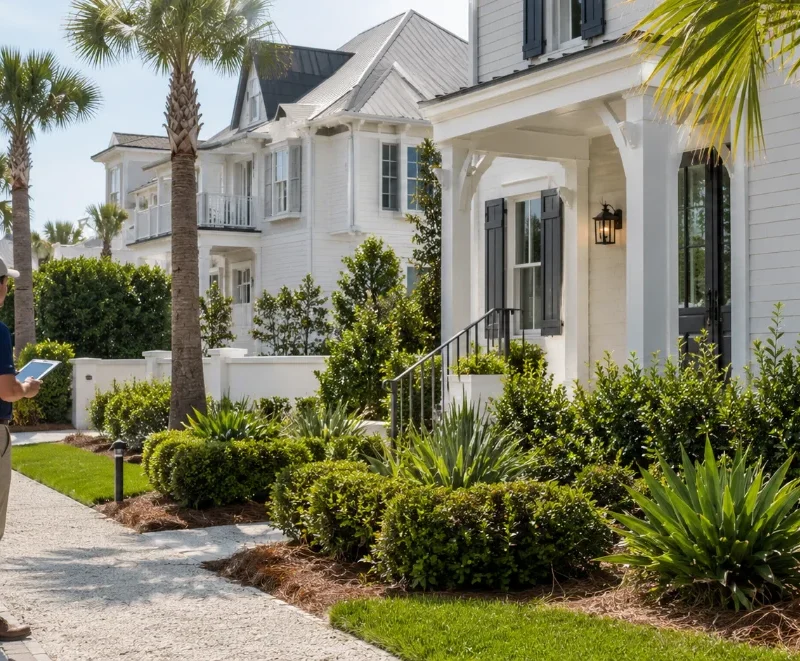
Lawn care in 30A Florida is one of the most rewarding — and demanding — aspects of owning property along the Emerald Coast. Florida’s Scenic Highway 30A is famous for its sugar-white sand beaches, turquoise water, and charming beach communities, but those same coastal conditions that make this stretch of the Panhandle so desirable also create unique challenges for maintaining healthy, attractive turf year-round.
Whether you own a vacation rental in Seagrove Beach, a full-time residence in WaterColor, or an investment property in Rosemary Beach, your lawn is one of the first things people see. A thick, well-maintained lawn signals pride of ownership, boosts curb appeal, and adds measurable value — especially in a competitive coastal real estate market.
But lawn care in 30A Florida isn’t the same as lawn care anywhere else. The combination of sandy soil, salt air, extreme summer heat, and extended growing seasons means that generic lawn advice simply doesn’t apply here. Homeowners who follow a standard regional program often end up frustrated by disease, weeds, and patchy turf.
This guide is written specifically for 30A properties. We’ll cover everything from grass selection and seasonal maintenance schedules to fertilization strategies, irrigation management, and the most common mistakes local homeowners make. By the end, you’ll have a clear, practical roadmap for keeping your 30A lawn healthy every single month of the year.
Why Lawn Care in 30A Florida Requires a Different Approach
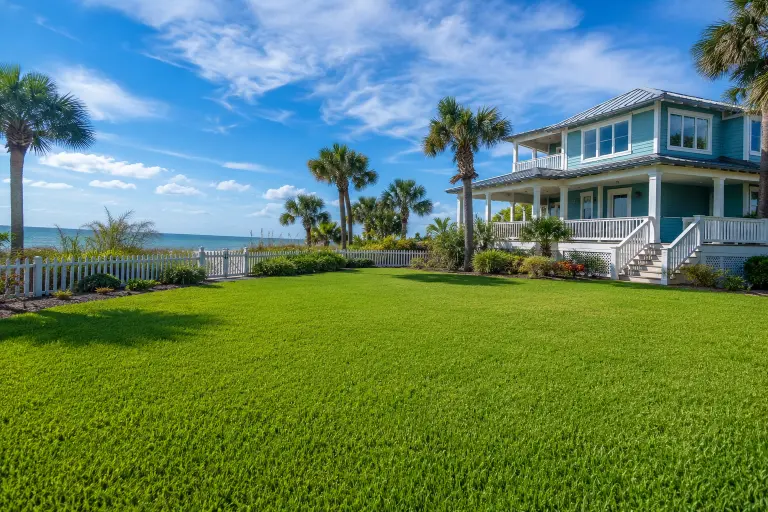
The first thing to understand about lawn care in 30A Florida is that the local environment is genuinely unlike most other places in the country. The communities stretching along Highway 30A — including Santa Rosa Beach, Blue Mountain Beach, Grayton Beach, Watercolor, Seaside, Alys Beach, and Rosemary Beach — share a set of environmental conditions that directly shape how grass grows and how it must be maintained.
- Sandy, fast-draining soils that lose water and nutrients very quickly
- High humidity, especially in summer, which creates ideal conditions for fungal disease
- Extended growing seasons that demand consistent, year-round attention
- Salt-laden coastal air that stresses grass not adapted to seaside exposure
- Intense summer heat, regularly exceeding 90°F from June through September
- Frequent afternoon thunderstorms that can saturate soil in minutes
- Mild winters that keep warm-season grasses semi-active rather than fully dormant
Because of these factors, effective lawn care in 30A Florida requires a location-specific plan — not a generic regional program designed for central Florida or the Southeast at large. What works in Atlanta or even Orlando often fails here.
Best Grass Types for Lawn Care in 30A Florida
Choosing the right turfgrass is the foundation of successful lawn care in 30A Florida. The best variety for your property depends on your sun exposure, soil conditions, how much maintenance you’re willing to do, and the look you’re after. Here are the three most common and proven options along the Emerald Coast.
St. Augustine Grass — The Coastal Favorite
St. Augustine grass is by far the most popular choice along 30A. It thrives in Florida’s subtropical heat, handles salt air well, spreads aggressively to fill bare spots, and produces a dense, attractive dark-green lawn that looks great on any property.
- Excellent heat and humidity tolerance
- Good salt tolerance — ideal for homes close to the Gulf
- Dense growth that naturally crowds out weeds over time
- Attractive appearance well-suited to vacation rentals and upscale homes
Recommended mowing height: 3.5 to 4 inches
Zoysia Grass — The Premium Low-Maintenance Option
Zoysia has grown in popularity among 30A homeowners who want a finer-textured, more drought-tolerant lawn. It’s slower to establish but rewards patience with a dense, carpet-like surface that resists weeds and handles wear well.
- Improved drought tolerance compared to St. Augustine
- Dense growth habit that significantly reduces weed pressure
- Strong wear resistance — great for active households or rental properties
- Lower water requirements once fully established
Recommended mowing height: 2 to 3 inches
Bermuda Grass — Best for Open, Sunny Areas
Bermuda grass performs best in full sun and is a common choice for larger properties and high-traffic areas. It recovers quickly from wear or damage and handles drought and heat as well as any grass variety available.
- Fast recovery from damage, stress, or heavy use
- Excellent drought and heat resistance
- Ideal for open, sunny lawns with good air circulation
Recommended mowing height: 1 to 2 inches
Spring Lawn Care in 30A Florida (March–May)
Spring is when lawn care in 30A Florida really kicks into gear. Grass that has been semi-dormant through the cooler months wakes up rapidly as temperatures climb, and getting ahead of the season’s demands makes the rest of the year much easier.
Resume a Consistent Mowing Schedule
As daytime temperatures reach the 70s and 80s, grass growth accelerates noticeably. Establishing a regular mowing routine early in spring prevents the lawn from getting ahead of you and ensures even, healthy growth through the season.
- Never remove more than one-third of the blade height in a single mowing
- Keep mower blades sharp — dull blades tear grass and open it up to disease
- Adjust cutting height based on your specific grass variety
- Leave clippings on the lawn when possible — they decompose and return nitrogen to the soil naturally
Apply the First Round of Fertilizer
Spring fertilization is a cornerstone of lawn care in 30A Florida. The goal is to fuel strong, healthy growth through the coming season without triggering the kind of fast, weak top growth that becomes disease-prone in summer humidity.
A well-designed spring fertilization program for 30A properties typically uses slow-release nitrogen for sustained feeding, potassium to build stress tolerance, and micronutrients formulated for sandy coastal soils. Avoid heavy nitrogen applications in early spring — they produce lush-looking but structurally weak turf.
Get Ahead of Weeds With Pre-Emergent Treatments
The most cost-effective weed control strategy is preventing germination before weeds ever appear. Pre-emergent herbicide applications in late February or early March stop crabgrass, goosegrass, spurge, and dollarweed before they become visible problems.
Missing this window forces you into difficult and expensive reactive weed control throughout summer — far harder than a single well-timed spring treatment.
Summer Lawn Care in 30A Florida (June–August)
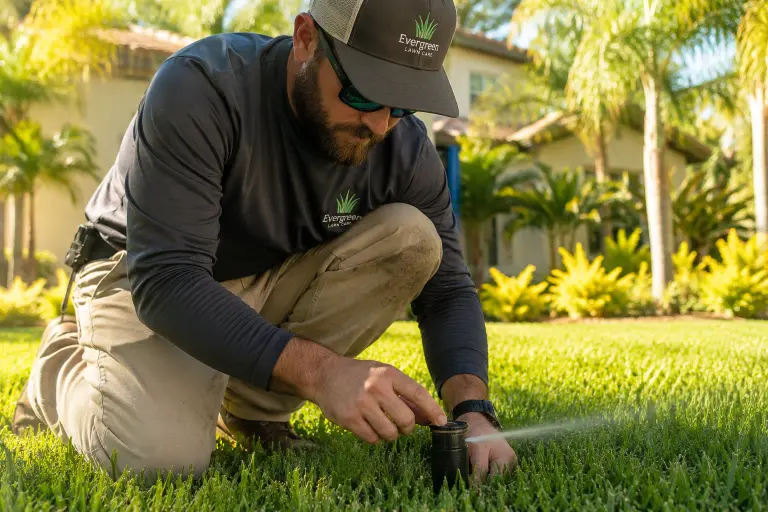
Summer is the most demanding season for lawn care in 30A Florida. Heat, humidity, heavy rainfall, and pest pressure all peak between June and August, and your lawn needs consistent monitoring and a smart strategy to get through it looking its best.
Master Your Irrigation Strategy
Counterintuitively, overwatering is one of the most common mistakes homeowners make during summer. Between daily thunderstorms and excessive irrigation systems, grass roots become shallow, disease risk climbs, and water is wasted.
- Water deeply and infrequently rather than lightly and often
- Water early in the morning — foliage should be dry by mid-morning to reduce fungal risk
- Target approximately 1 inch of water per week, including natural rainfall
- Use a rain gauge or smart irrigation controller to track actual water delivery
According to the University of Florida IFAS Extension, proper irrigation scheduling is one of the highest-impact changes homeowners can make for long-term lawn health and responsible water use along the Emerald Coast.
🔗 UF/IFAS Florida Lawn Care & Irrigation Guidance
Monitor and Treat Fungal Diseases
High humidity combined with warm nighttime temperatures creates near-perfect conditions for fungal disease in Florida lawns. The most common problems during summer include brown patch, gray leaf spot, and large patch fungus.
Early warning signs include circular patches of yellowing or dying grass, unexpected thinning, and a grayish or water-soaked appearance in the early morning hours. Catching disease early makes treatment dramatically more effective and far less expensive.
Stay on Top of Summer Pest Pressure
Effective summer lawn care in 30A Florida means staying ahead of pests, not reacting after damage is done. Chinch bugs are especially destructive in St. Augustine grass and can devastate large areas quickly if not caught early. Armyworms, mole crickets, and sod webworms are also active during the hottest months.
A simple weekly walk across your lawn — looking for discolored patches, unusual insect activity, or areas that seem to die off rapidly — can catch infestations while they’re still manageable.
Fall Lawn Care in 30A Florida (September–November)
Fall is one of the most strategically important seasons for lawn care in 30A Florida. Growth slows, temperatures become more forgiving, and the investments you make now will determine how quickly and strongly your lawn bounces back in spring.
A Well-Timed Fall Fertilization
A fall fertilizer application helps roots strengthen going into the cooler months. The goal isn’t aggressive top growth — it’s building resilience. A balanced formula designed for coastal Florida conditions, with potassium as a key component, improves cold tolerance and sets your lawn up for a fast spring green-up.
Prevent Cool-Season Weeds Before They Emerge
Fall is a critical but often-overlooked window for weed control. Cool-season weeds like chickweed, henbit, and annual bluegrass germinate in fall and become highly visible, difficult-to-control problems by December and January.
A fall pre-emergent herbicide application targets these weeds before they take hold, saving you from dealing with a weedy winter lawn. This is a straightforward, affordable step that pays off significantly over winter and into spring.
Adjust Mowing Frequency as Growth Slows
As grass growth naturally slows in fall, reduce your mowing frequency accordingly. Continue maintaining the correct blade height for your variety — avoid scalping the lawn before winter. Cutting too short weakens the grass, slows spring recovery, and leaves the soil exposed to weed seeds.
Winter Lawn Care in 30A Florida (December–February)
Although winters along the Emerald Coast are mild compared to most of the country, winter lawn care in 30A Florida still requires attention. Most warm-season grasses enter a semi-dormant state, and care requirements shift significantly.
Scale Back Fertilizer Applications
Applying nitrogen to a semi-dormant lawn is largely wasteful — and can actually stimulate weak new growth that gets damaged in a cold snap. During winter, focus on soil health rather than feeding. If you apply any product, choose one that supports root development without pushing top growth.
Keep Up With Disease Monitoring
Even dormant lawns can experience fungal activity during cool, wet periods. Regular visual inspections through winter help catch issues before they establish and carry forward into the growing season.
Use Winter to Prepare for Spring
Winter is one of the best planning seasons for 30A homeowners. Use the quieter months to service your irrigation system, sharpen mower blades, schedule your spring treatment program, and assess any areas that may need overseeding, renovation, or special attention when growth resumes.
How Sandy Soil Shapes Lawn Care in 30A Florida
Sandy coastal soil is one of the defining challenges of lawn care in 30A Florida. Understanding how these soils behave is essential for making smart decisions about watering frequency, fertilizer timing, and nutrient management.
- Sandy soil drains extremely rapidly — water and soluble nutrients pass through quickly
- Nutrient retention is poor, meaning fertilizer must be applied more frequently in smaller doses
- The root zone can dry out fast during dry stretches, even in summer
- Leaching risk means fertilizer applications must be carefully managed to protect Gulf Coast waterways
Because nutrients leach through sandy soil faster than in heavier soils, a slow-release fertilizer approach split across multiple seasonal applications is almost always more effective — and more environmentally responsible — than a single heavy application. This is especially important given 30A’s proximity to sensitive coastal waters.
The Florida Department of Environmental Protection provides helpful guidance on responsible fertilizer use near coastal waterways, which is particularly relevant for homeowners throughout the 30A corridor.
🔗 Florida DEP — Fertilizer & Coastal Water Quality
Common Lawn Care Mistakes to Avoid in 30A Florida
Many of the most damaging lawn problems in 30A aren’t caused by pests or disease — they’re caused by well-intentioned homeowners making avoidable mistakes. Here’s what to watch out for when managing lawn care in 30A Florida:
- Mowing too short: Scalping weakens grass, exposes soil to weed seeds, and increases heat and drought stress. Always maintain the correct mowing height for your grass type, especially heading into summer.
- Overwatering: Excess moisture is one of the top causes of fungal disease and shallow root development on 30A properties. Deep, infrequent watering is almost always superior to light, daily irrigation.
- Over-fertilizing: More fertilizer does not produce a greener or healthier lawn. Excessive nitrogen creates fast, structurally weak growth that is highly susceptible to disease in Florida’s heat and humidity.
- Ignoring early warning signs: A small discolored patch or a few weeds are easy and inexpensive to address. Left untreated, they become costly turf replacement projects.
- Using generic lawn programs: One-size-fits-all regional programs aren’t built for the specific soils, grass varieties, and climate of 30A. Lawn care in 30A Florida demands a location-specific strategy.
Why Professional Lawn Care in 30A Florida Pays Off
For many 30A homeowners — especially those managing vacation rentals or out-of-town properties — professional lawn care in 30A Florida is one of the smartest and most cost-effective investments you can make in your property’s long-term value and appearance.
A professionally managed program delivers scheduled fertilization timed precisely to the coastal growing season, targeted weed control before problems take hold, early pest detection and intervention, disease monitoring and treatment when needed, and regular mowing at the correct height for your grass variety.
This proactive approach to lawn care in 30A Florida protects your turf investment and keeps curb appeal high throughout the year — something that matters enormously for rental income and resale value in one of Florida’s most sought-after coastal communities.
If you’re managing a property from out of town, working with a knowledgeable local lawn care team means your lawn is being monitored by someone who understands the specific seasonal patterns, soil conditions, and pest pressures unique to the 30A area.
Keep Your 30A Lawn Healthy and Green Year-Round
Successful lawn care in 30A Florida isn’t a one-season task — it’s a year-round commitment that compounds over time. Every smart decision you make, from choosing the right grass variety and managing sandy coastal soils to staying ahead of summer pests and cool-season weeds, adds up to a lawn that looks great, holds its value, and handles the demands of coastal Florida living.
Whether you’re working with St. Augustine, Zoysia, or Bermuda turf, the principles of lawn care in 30A Florida remain the same: work with your environment rather than against it, stay consistent through every season, and address problems early before they become expensive.
If you’re looking for professional lawn maintenance, seasonal fertilization, irrigation support, or targeted weed and pest control services along 30A, a local specialist can help design a customized lawn care program built around your specific property and the unique growing conditions of Florida’s Emerald Coast.
Related posts

Landscaping Near Me 30A: How to Find and Vet a Local Company

Outdoor Property Maintenance 30A: Complete Exterior Care Beyond the Lawn
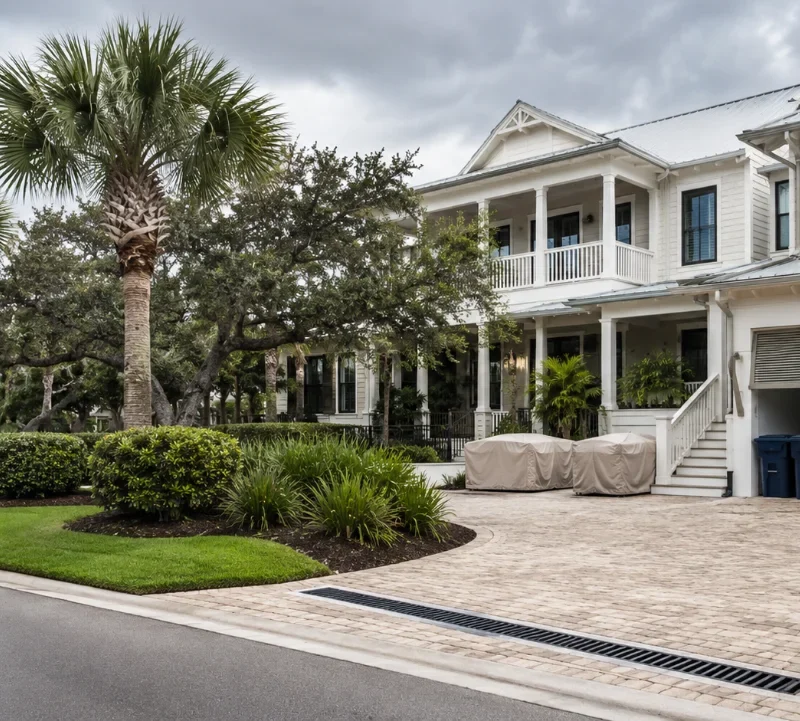
Storm Prep Landscaping 30A: A Homeowner’s Seasonal Checklist

Builder Landscape Packages 30A: What New Construction Homes Need From Day One
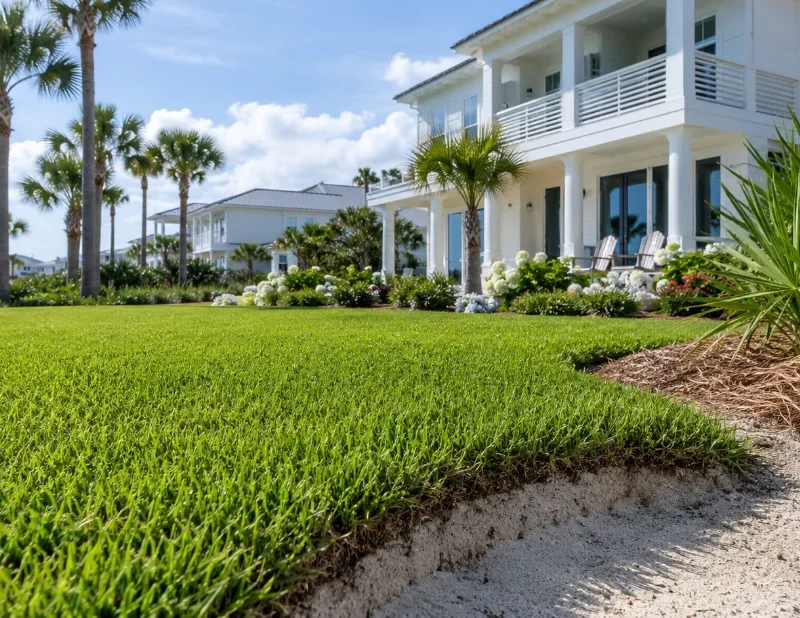
Lawn Fertilization 30A Florida: What Your Sandy Soil Actually Needs