HOA Landscaping 30A: How to Stay Compliant Without the Stress
Owning a property in a managed 30A community can feel effortless until a landscape violation notice arrives. HOA landscaping 30A rules may cover plant choices, mulch, turf condition, tree trimming, bed maintenance, irrigation visibility, screening, lighting, and even how quickly an issue must be corrected.
For full-time residents, vacation rental owners, absentee owners, and property managers, the challenge is not simply keeping the yard attractive. It is keeping the property aligned with the current standards of the specific community while also protecting curb appeal, drainage, plant health, and long-term value.
The safest approach is to treat compliance as an ongoing maintenance system, not a last-minute response to a notice. This guide explains how to reduce violations, document work, coordinate approvals, and choose a local landscape partner who understands the expectations common to Rosemary Beach, Alys Beach, WaterColor, Seaside, and other communities along Scenic Highway 30A.
Why HOA Landscaping 30A Can Feel Complicated
Managed communities are designed to protect a consistent visual character. That usually means exterior changes are reviewed more closely than they would be in a typical neighborhood.
The difficulty is that every community can have a different design code, plant palette, review process, maintenance standard, and enforcement timeline. A treatment that is acceptable in one neighborhood may be prohibited or require approval in another.
HOA landscaping 30A also changes over time. Approved plant lists may be updated, review committees may revise procedures, and replacement standards may become more detailed after storms, disease outbreaks, or community renovations.
That is why owners should never rely only on a neighbor’s yard, an old contractor estimate, or a guideline saved years ago. The current HOA, architectural review board, design code, and local permitting requirements should always control the work.
What HOA Landscape Standards Commonly Regulate
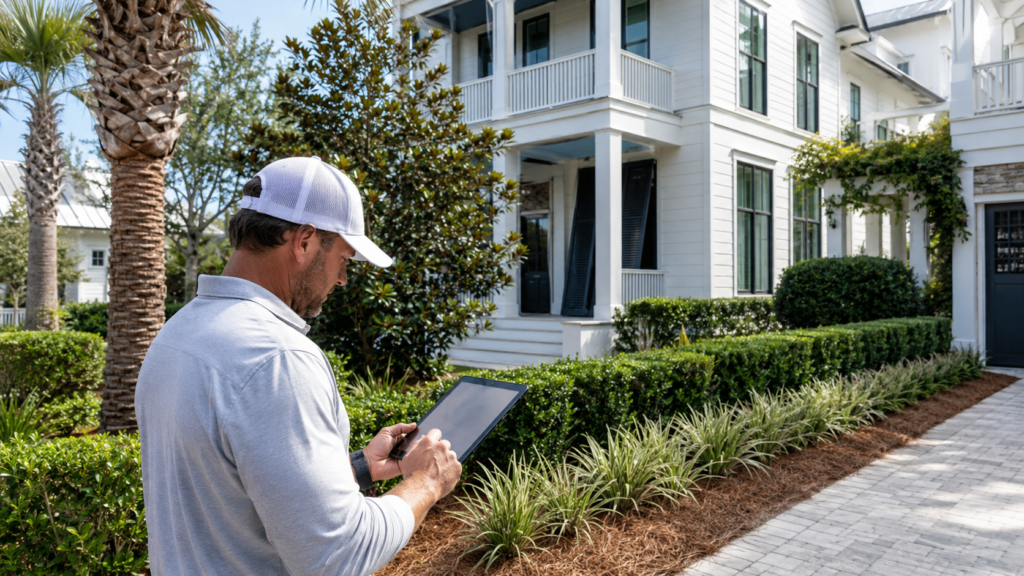
Most managed communities focus on several recurring categories. The exact rule may differ, but owners are often expected to maintain a neat, healthy, and architecturally consistent landscape.
Plant Palettes and Substitutions
Some communities limit plant material to an approved list or require committee approval for substitutions. This helps preserve the intended coastal character and reduces the introduction of invasive, oversized, or poorly adapted plants.
A replacement shrub that looks similar at installation may mature to a different height, texture, or spread. Careful HOA landscaping 30A compares mature characteristics before approving a substitute. HOA landscaping 30A should therefore evaluate substitutions by botanical name, mature size, salt , and placement rather than by appearance alone.
Mulch, Pine Straw, and Bed Finish
Communities may specify whether beds use pine straw, bark mulch, gravel, shell, or another approved finish. Depth, color, edge definition, and visibility from public areas may also matter.
Seaside’s published architectural regulations provide a clear example of how specific standards can become: its residential sitework section says grass is prohibited on residential lots, pine straw is permitted, mulch is prohibited, and plants must come from the Seaside Plant List. That is exactly why owners must verify the rules for their own community rather than assume one 30A standard applies everywhere.
Turf Health and Bare Areas
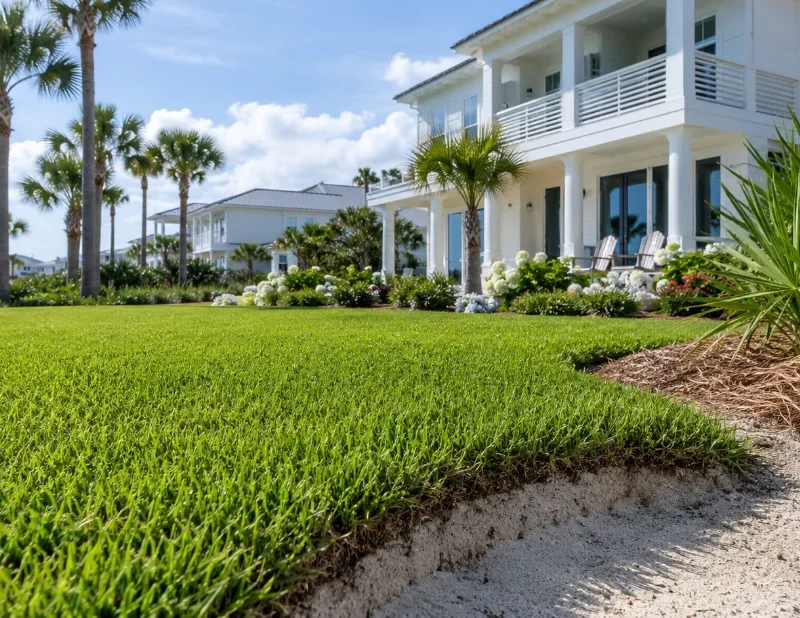
Where turf is permitted, associations may require lawns to remain healthy, edged, weed-controlled, and free of significant bare patches. Chronic decline can become a compliance issue even when the underlying cause is irrigation, shade, pests, or disease.
HOA lawn care 30A should address the cause instead of repeatedly replacing sod. A professional inspection may reveal poor coverage, compacted soil, incorrect mowing height, salt exposure, or a grass type that does not fit the site.
Trees, Hedges, and Sight Lines
Tree removal, major pruning, hedge height, and view corridors are commonly regulated. Some communities require approval before removing a tree or changing a hedge that contributes to privacy or streetscape character.
Aggressive trimming can create safety issues, damage trees, and change the approved appearance of the property. HOA landscaping 30A should use qualified pruning practices and document why major work is needed.
The Difference Between Maintenance and a Landscape Change
Routine maintenance usually includes mowing, edging, weeding, pruning within established form, replacing seasonal color, and refreshing approved bed material. A landscape change alters the design.
Removing a mature tree, replacing a hedge with a different species, adding a wall, changing bed lines, installing artificial turf, modifying irrigation, or replacing approved groundcover may require review.
The line between maintenance and modification is not always obvious. A large-scale replacement after freeze damage or disease may still need approval even when the owner is restoring the yard.
Before work begins, HOA landscaping 30A should classify the project correctly. Ask whether the task is routine upkeep, like-for-like replacement, or a design change that needs a formal submittal.
Community Examples Along 30A
Rosemary Beach, Alys Beach, WaterColor, and Seaside are known for strong visual identities, but their rules are not interchangeable. Each community’s current documents and review process should be checked before work is priced or scheduled.
Rosemary Beach HOA Landscaping
Rosemary Beach HOA landscaping often needs to support a walkable streetscape, architectural consistency, compact lots, and carefully managed public-facing areas. Owners should confirm current requirements for plant replacement, tree work, screening, exterior lighting, and visible service areas.
A remote owner should also verify who is authorized to communicate with the association. Property managers, contractors, and homeowners may need different permissions when submitting plans or responding to notices.
Alys Beach Landscaping Standards
Alys Beach landscaping standards are closely connected to the community’s distinctive architecture and highly controlled exterior appearance. Small changes can be visually significant against clean walls, courtyards, and structured public spaces.
Owners should confirm the approved palette, irrigation expectations, hardscape rules, and review process before replacing material. HOA landscaping 30A in this setting should coordinate closely with architecture, drainage, and privacy.
WaterColor HOA Landscape Expectations
A WaterColor HOA landscape plan may need to preserve a natural coastal character while maintaining homes, rental properties, paths, and high-traffic outdoor areas. Native and regionally appropriate material often works well, but the current community standards should guide every project.
Vacation rental turnover can accelerate wear around parking, entries, bikes, pools, and outdoor showers. Maintenance plans should include those high-use zones instead of treating the yard as a low-traffic residence.
Seaside Landscape Rules
Seaside publishes detailed architectural regulations and describes its landscape as native, environmentally friendly, and sustainable. The community’s official materials demonstrate that 30A standards can address items as specific as plant lists, surface materials, grass, pine straw, irrigation, and invasive species.
The lesson is not that every community follows Seaside’s rules. The lesson is that HOA landscaping 30A must be based on the exact documents governing the property.
How to Respond to a Landscape Violation Notice
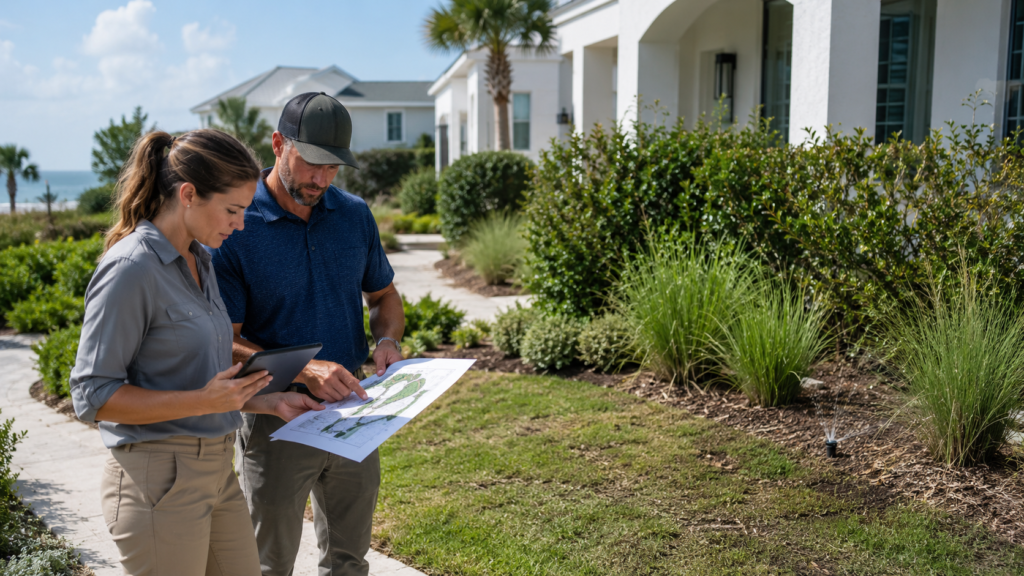
A landscape violation notice 30A owners receive should be handled quickly, calmly, and in writing. Ignoring the notice usually reduces options and may lead to follow-up inspections, fines, or additional administrative steps.
First, read the notice carefully. Identify the cited condition, correction deadline, governing rule, contact person, and whether proof of completion is required.
Second, document the property before work begins. Take clear photos from the same angles the association is likely to inspect. Save the notice, emails, contractor recommendations, receipts, and completion photos.
Third, confirm whether the correction requires approval. Replacing dead material with a different species may solve one violation while creating another if the substitute is not permitted.
HOA landscaping 30A should prioritize safety, visible noncompliance, and deadline-sensitive work. If the full repair cannot be completed immediately, contact the association and ask whether a written plan, approved extension, or temporary correction is available.
Ask for Clarification When the Notice Is Vague
A notice may say that beds are unmaintained or landscaping is inconsistent without identifying the exact area. Ask for the location, rule reference, and expected correction.
Clear questions reduce unnecessary work and create a written record of the owner’s effort to comply.
Close the Loop With Evidence
After completion, send dated photos and any required contractor documentation. Ask for written confirmation that the item is closed.
Remote owners should not assume that the next inspection will automatically clear the record. HOA landscaping 30A works best when completion is actively documented.
Preventing Violations With a Year-Round Maintenance Plan
Compliance becomes easier when the property follows a consistent schedule. Emergency cleanups are more expensive and more disruptive than routine care.
A year-round plan should include mowing or groundcover care, edging, bed cleanup, pruning, irrigation checks, weed control, storm inspection, mulch or pine-straw refresh, plant replacement, and seasonal reporting.
The frequency should reflect growth, weather, occupancy, and community visibility. A front courtyard in Alys Beach may need a different service rhythm from a shaded rental property in WaterColor.
Managed community lawn care Florida plans should also include photographs. Monthly or seasonal images help owners verify progress, track recurring issues, and respond to HOA questions without traveling to the property.
HOA landscaping 30A should identify which items require immediate owner approval and which routine corrections the contractor may complete automatically within an agreed budget.
Mulch, Pine Straw, and Bed Maintenance
Bed presentation is one of the easiest conditions for an association to observe. Thin coverage, weeds, washed-out edges, faded material, and exposed irrigation lines can make the entire property look neglected.
The correct material must come from the governing guidelines. Consistent HOA landscaping 30A keeps approved bed material on record for future service visits. Some communities prefer pine straw, some approve specific mulch colors or textures, and others use gravel, shell, or native groundcovers.
Depth matters because too little material allows weeds and soil exposure, while too much can hold moisture against trunks and building surfaces. Keep mulch and pine straw away from tree flare, siding, drains, and equipment access.
HOA landscaping 30A should schedule bed refresh based on appearance and material breakdown, not automatically add a full layer on top of old material every visit.
Pruning Trees and Shrubs Without Creating New Problems
Pruning should preserve plant health, approved form, sight lines, and access. Repeated shearing may keep a hedge inside a narrow space, but it can create dense outer growth and bare interiors.
Trees should not be topped. Dead, damaged, crossing, or hazardous branches should be evaluated carefully, and major work may require approval or a qualified tree professional.
Coastal wind and storms make documentation important. If a tree is unsafe, photograph the condition and obtain a written recommendation before removal.
The University of Florida’s Florida-Friendly Landscaping Program promotes right-plant, right-place decisions, responsible maintenance, water efficiency, and protection of Florida’s natural resources. Those principles support HOA compliance because healthier plants require fewer emergency replacements.
HOA landscaping 30A should also maintain clearance around walkways, addresses, lighting, signs, utilities, and fire-safety access without over-pruning the approved design.
Irrigation, Drainage, and Visible Stress
A brown lawn or declining bed may appear to be a maintenance failure when the real problem is irrigation or drainage. Dry zones, broken heads, overspray, root rot, and standing water can all create visible noncompliance.
Irrigation should be tested by zone, not only by watching the controller run. Technical HOA landscaping 30A inspections separate watering failures from ordinary maintenance issues. Check pressure, head alignment, clogged emitters, coverage, leaks, and whether plants with different needs share the same schedule.
Drainage problems should be documented after rain. Water crossing a sidewalk, pooling near a foundation, or eroding bed material may require design work rather than more maintenance.
HOA landscaping 30A should connect the association’s visual expectations with the technical cause of decline. Treating symptoms without repairing the system leads to repeated violations.
Remote Owners Need Clear Reporting and Authority
Luxury absentee owners often rely on property managers, rental managers, housekeepers, pool companies, and landscape contractors. When responsibilities overlap, everyone may assume someone else is handling the yard.
A written scope should define who inspects the property, who receives HOA correspondence, who can authorize repairs, and what dollar amount can be approved without contacting the owner. This structure makes HOA landscaping 30A easier to manage from a distance.
Reports should be short but specific. Include completed work, emerging concerns, recommended action, deadlines, photos, and whether HOA approval is needed.
HOA landscaping 30A becomes far less stressful when a local contact can inspect the property quickly, speak with the association, and coordinate corrections before the issue grows.
New Landscape Projects and HOA Approval
Landscape design, hardscape, irrigation changes, major screening, outdoor lighting, and tree work should be planned with the review process from the beginning.
A complete submittal may include a scaled plan, plant schedule, material samples, photos, drainage notes, lighting specifications, and contractor information. Organized HOA landscaping 30A documentation reduces avoidable review questions. Incomplete packages often create delay.
The Florida-Friendly Guide to Plant Selection and Landscape Design can help owners understand site-appropriate planting, but community approval still depends on the governing documents for the property.
HOA landscaping 30A should not order nonreturnable material until approval is confirmed. If substitutions become necessary, document them and request written acceptance before installation.
Internally link this section to the landscape design article and the HOA landscaping service page so readers can move from planning to professional support.
Common Mistakes That Lead to Repeat Violations
The first mistake is using a generic crew that does not know the community’s standards. A technically acceptable maintenance practice may still conflict with the approved appearance.
The second is making unapproved substitutions. Replacing dead material quickly can feel responsible, but the wrong plant, mulch, or edging can create another notice.
The third is waiting for the association to identify every issue. Visible decline should be corrected through regular inspection before it becomes an enforcement matter.
The fourth is failing to document completion. Without photos and written confirmation, owners may struggle to prove that work was finished on time.
The fifth is treating all 30A communities the same. HOA landscaping 30A requires property-specific knowledge, current documents, and clear communication.
How to Choose a Local HOA Landscape Partner
A strong local partner should understand both horticulture and managed-community operations. Ask how the company handles guidelines, approvals, notices, photographs, substitutions, and communication with remote owners.
The provider should be able to explain the difference between maintenance, correction, and design work. Professional HOA landscaping 30A should also identify when outside specialists or formal approvals are needed. It should also recognize when an issue requires irrigation repair, tree expertise, drainage work, or formal association approval.
Look for written scopes, dependable scheduling, and clear reporting. A low price is not helpful if missed details create fines, emergency visits, or repeated replacement costs.
HOA landscaping 30A should reduce liability and uncertainty. Internally link this section to the lawn maintenance service and earlier guides on selecting a landscaping company, coastal landscaping, vacation-rental landscaping, and durable landscape design.
Stay Compliant Without Managing Every Detail Yourself
HOA compliance does not need to become a constant source of stress. The key is knowing the current rules, maintaining the property on a predictable schedule, documenting work, and responding quickly when conditions change.
HOA landscaping 30A is most effective when the owner, property manager, contractor, and association all know who is responsible for the next step.
A local team can monitor visible conditions, coordinate routine care, flag approval issues, and provide the documentation remote owners need.
Talk to a local HOA expert at Salty Air Landscaping to create a maintenance and compliance plan for your 30A property.
Related posts

Landscaping Near Me 30A: How to Find and Vet a Local Company

Outdoor Property Maintenance 30A: Complete Exterior Care Beyond the Lawn
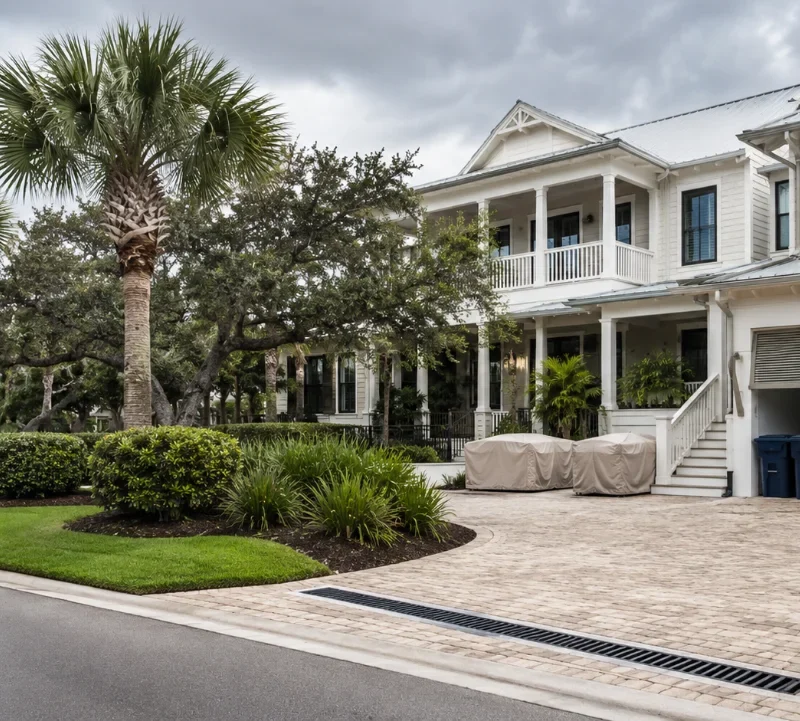
Storm Prep Landscaping 30A: A Homeowner’s Seasonal Checklist
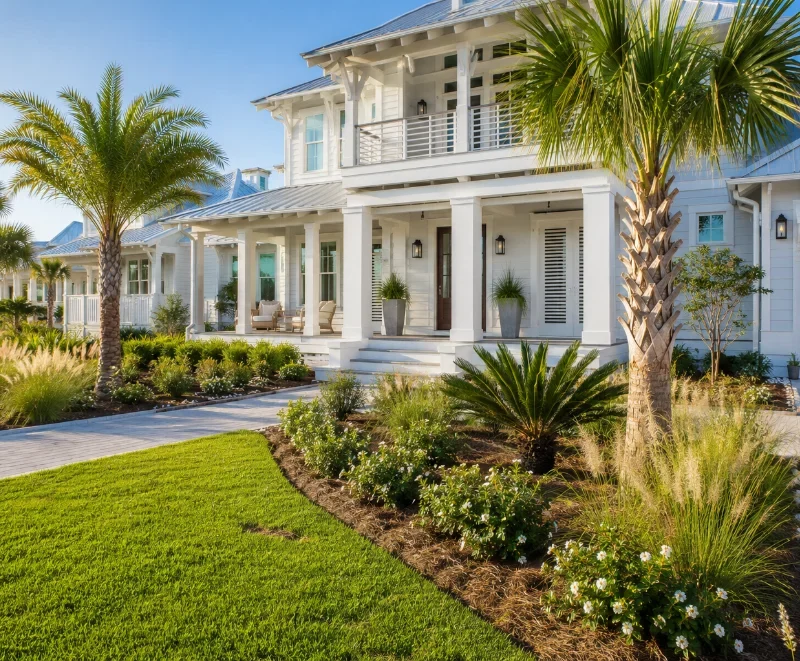
Builder Landscape Packages 30A: What New Construction Homes Need From Day One