Landscape Design 30A Florida: How to Plan a Yard That Actually Lasts
A beautiful coastal yard needs more than a good plant list. Successful landscape design 30A Florida starts with the realities of the property: salt-laden wind, sandy soil, intense sun, heavy rain, drainage patterns, HOA standards, construction conditions, and the way the home will actually be used.
That is especially important for new-construction owners, recent 30A transplants, vacation rental investors, and homeowners planning a full renovation. A landscape may look polished on installation day, yet decline quickly when the design ignores exposure, plant spacing, irrigation, stormwater, or long-term maintenance.
The goal is not to fill every empty bed. The goal is to create a cohesive outdoor plan that becomes stronger as it matures. This guide walks through the complete design process for properties in Rosemary Beach, Alys Beach, Inlet Beach, Santa Rosa Beach, and nearby communities along the Emerald Coast.
Why Landscape Design 30A Florida Requires a Coastal Strategy
Coastal properties operate under different pressures than inland landscapes. Salt spray can burn foliage, wind can dry plants faster than expected, and sandy soil may drain before roots absorb enough moisture. At the same time, summer storms can overwhelm low areas and expose grading problems.
A strong landscape design 30A Florida plan evaluates those conditions before selecting plants or hardscape materials. The designer should study how wind moves across the property, where shade falls during different seasons, how water leaves the site, and which views should be framed or screened.
The distance from open water also matters. A sheltered courtyard may support plants that fail in an exposed front yard. A home one block inland may experience less direct salt spray than a property facing a dune or coastal lake.
Design decisions should therefore be based on microclimates within the property, not only the ZIP code. One side of the home may be hot and exposed, while another remains shaded and moist for much of the day.
Start With a Complete Site Assessment
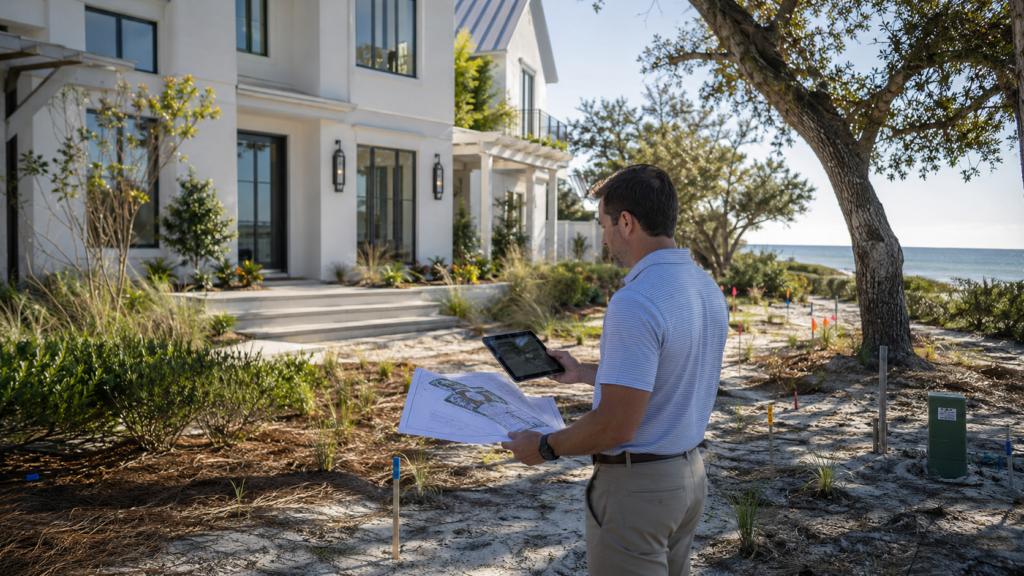
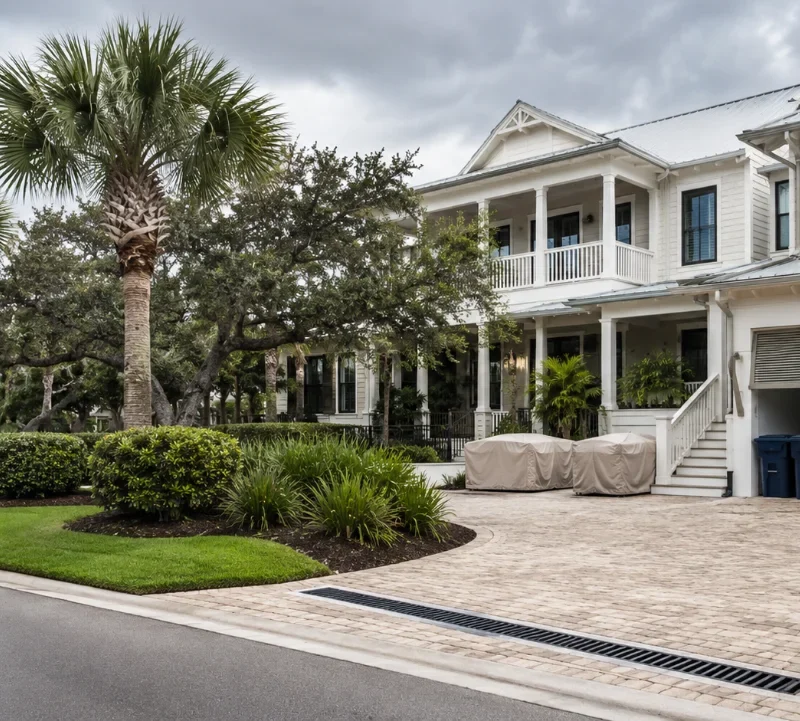
landscape design 30A Florida site assessment for a coastal home
The site assessment is the foundation of landscape design 30A Florida. It identifies opportunities, restrictions, and hidden costs before materials are ordered or crews arrive.
A proper assessment should record property lines, existing trees, utility locations, architectural features, elevation changes, drainage paths, irrigation zones, soil conditions, sun exposure, and access for installation equipment. This documentation keeps landscape design 30A Florida decisions tied to the actual site. It should also note neighboring views, road visibility, pool areas, outdoor showers, service yards, and guest circulation.
For renovation projects, the designer should decide what can be preserved. Mature trees, established screening, healthy palms, or existing hardscape may provide value if they fit the new plan. Removing everything automatically can increase cost and erase useful character.
New-construction landscaping 30A projects need special attention because construction traffic often compacts soil, changes grade, damages roots, and leaves buried debris. The finished home may also create drainage patterns that were not obvious before the structure was built.
Review Sun, Wind, and Salt Exposure
Map full sun, filtered light, and deep shade rather than relying on a quick midday visit. The same bed may receive morning sun and harsh reflected afternoon heat from a wall or driveway.
Wind exposure affects plant form and water demand. Salt-sensitive plants may survive in protected courtyards but struggle near open streets, dunes, balconies, or gaps between buildings.
Identify Drainage Before Planting
Drainage should be solved before decorative planting begins. Look for low areas, downspout discharge, runoff from neighboring properties, pool overflow, and hard surfaces that direct water toward the foundation.
The designer may recommend grading adjustments, swales, permeable materials, collection drains, or rain-garden areas depending on the site. Plants can support a drainage strategy, but they should not be used to hide a serious grading problem.
A site-specific landscape design 30A Florida plan should be updated whenever architecture, drainage, or outdoor-use goals change.
Understand HOA and Community Design Standards
Many 30A communities maintain detailed architectural and landscape requirements. These rules may cover plant palettes, hedge height, tree replacement, screening, irrigation, lighting, hardscape materials, street-facing appearance, and approval procedures.
HOA landscape design 30A should begin by collecting the current design guidelines, approved plant lists, submittal forms, and review deadlines. Requirements can change, and neighboring communities may have very different standards.
A design that ignores the approval process can create delays, redesign fees, and material changes after plants have already been sourced. The safest approach is to prepare a clear plan that shows plant names, quantities, spacing, hardscape limits, drainage features, and any required screening.
Landscape design 30A Florida also needs to distinguish HOA approval from county permits or utility requirements. An HOA approval does not automatically confirm that every wall, driveway change, drainage feature, or structure is permitted.
Prepare a Complete Submittal
A strong submittal typically includes a scaled plan, plant schedule, material notes, existing conditions, proposed removals, irrigation information, and clear photos or product references where required.
The more complete the package, the easier it is for reviewers to understand the intent. Vague submittals often create more questions and slower approval. Clear landscape design 30A Florida documentation also makes revisions easier to track.
Protect the Design During Installation
Approval is only the first step. Substituting plants, changing bed lines, or moving hardscape during installation may create a final result that no longer matches the approved plan.
Any necessary substitutions should be reviewed for mature size, salt tolerance, color, texture, and HOA compliance before installation.
Choose Plants for Coastal Conditions, Not Just Appearance
Plant selection is where landscape design 30A Florida either becomes durable or begins creating future maintenance problems. A coastal plant palette should balance beauty with salt tolerance, drought response, cold hardiness, wind resistance, mature size, and disease pressure.
The University of Florida’s official guidance on coastal landscapes recommends salt-tolerant plants near the ocean and notes that plants within roughly one-eighth of a mile of the coast should have at least some salt tolerance.
Useful coastal choices may include live oak, southern red cedar, wax myrtle, yaupon holly, saw palmetto, coontie, muhly grass, beach sunflower, railroad vine, and other species suited to the specific exposure. The official Florida-Friendly Guide to Plant Selection and Landscape Design is another useful planning reference for matching plants to site conditions. The correct selection depends on mature size and the exact location, not merely whether a plant appears on a general coastal list.
Coastal landscape design Florida should also preserve compatible native vegetation where possible. Existing plants often reveal which species already tolerate the site’s soil, wind, and moisture patterns.
Design in Layers
A well-composed landscape uses layers: canopy trees, understory trees, screening shrubs, foundation plants, grasses, perennials, groundcovers, and turf or alternatives. Each layer should have a purpose.
Layering creates depth and seasonal interest while reducing the temptation to overcrowd beds. It also helps screen utilities, frame entries, soften walls, and guide movement through the property. Layered landscape design 30A Florida creates visual depth without relying on constant shearing.
Plan for Mature Size
Small nursery plants can make a new bed look empty, which leads many projects to install too much material. The result is crowded shrubs, constant shearing, blocked windows, and poor air movement within a few seasons.
Landscape design 30A Florida should show realistic mature widths and heights. Proper spacing may look restrained at first, but it reduces future pruning and replacement costs.
For exposed lots, landscape design 30A Florida should place the most salt-tolerant material on the windward edge.
Build a Strong Front Yard and Arrival Experience
The front yard establishes the identity of the property. Front yard design 30A should make the entrance easy to understand, support the architecture, and remain attractive from the street throughout the year. Thoughtful landscape design 30A Florida makes that arrival feel intentional rather than crowded.
Start with the primary view. Decide what visitors should notice first: the entry, a specimen tree, a courtyard gate, a porch, or a framed architectural feature. Avoid placing competing focal points everywhere.
Planting should guide people rather than obstruct movement. Keep sight lines clear near driveways and intersections. Use low materials near paths and reserve taller screening for locations where privacy is actually needed.
Curb appeal 30A homes often comes from restraint. Repeating a limited palette, using clean bed lines, and selecting materials that match the architecture can feel more luxurious than installing many unrelated plants.
Landscape design 30A Florida should also consider nighttime arrival. Low-voltage lighting can improve safety and highlight structure, but fixtures should be placed carefully to avoid glare, excessive brightness, or conflict with community standards.
Integrate Hardscape With the Landscape Plan
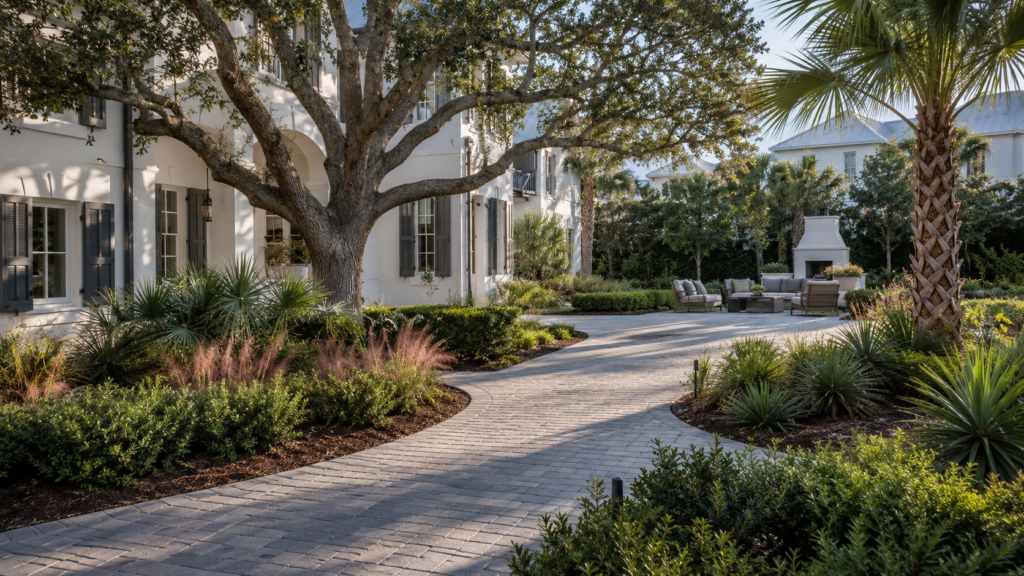
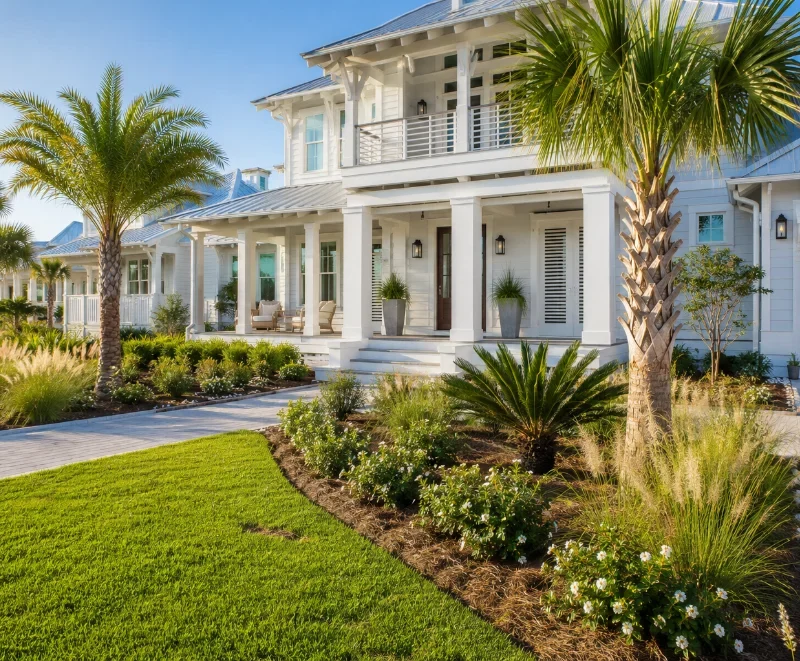
landscape design 30A Florida with coastal planting and hardscape
Hardscape includes paths, patios, pool decks, retaining elements, steps, walls, edging, driveways, outdoor kitchens, and decorative gravel. These features should be designed with planting and drainage, not added as separate projects.
Landscape installation 30A often becomes more efficient when hardscape, irrigation, drainage, and planting are sequenced from one coordinated plan. Crews are less likely to damage finished work or discover that utilities conflict with a new walkway.
Material selection should consider salt, heat, staining, slip resistance, maintenance, and architectural compatibility. Durable landscape design 30A Florida coordinates those material choices with planting and drainage. A material that looks attractive in a showroom may become uncomfortably hot or difficult to maintain near a pool.
Permeable surfaces can help manage stormwater where appropriate. Joints, base preparation, edge restraints, and grade are just as important as the visible finish.
Connect Indoor and Outdoor Spaces
The best outdoor spaces feel connected to the home’s floor plan. Connected landscape design 30A Florida also makes patios, paths, and views feel like extensions of the architecture. Doors, windows, porches, and interior sight lines should influence patios, planting, lighting, and focal points.
Outdoor design Rosemary Beach properties may need to work within compact lots, strong architectural character, pedestrian streets, and close neighboring homes. Every square foot should support circulation, privacy, or experience.
Design Service Areas Deliberately
Trash storage, pool equipment, HVAC units, utilities, and outdoor showers are necessary, but they should not dominate the landscape.
Screen them with structures or plants that allow service access and airflow. Do not install shrubs so tightly that technicians cannot reach equipment or future maintenance requires removing mature plants.
Solve Drainage and Irrigation Together
Water management is central to landscape design 30A Florida. Sandy soil drains rapidly, but compacted construction areas, low grades, and concentrated roof runoff can still create standing water or erosion.
Irrigation should be divided into zones based on plant needs and exposure. Turf, new shrubs, established native plants, sunny beds, and shaded beds may need different run times.
Drip or low-volume irrigation may suit some planting beds, while turf generally needs uniform overhead coverage. The plan should include head-to-head coverage where appropriate and prevent overspray onto buildings, sidewalks, and streets.
A good design also anticipates plant establishment. Newly installed material requires careful watering at first, but the system should be adjusted as roots develop. Leaving establishment schedules in place indefinitely can cause disease, waste water, and reduce drought resilience.
For construction or renovation work, internally link this section to the landscape installation service and irrigation resources so readers understand that drainage, grading, and irrigation must be coordinated before planting.
Coordinated landscape design 30A Florida reduces conflicts between irrigation lines, hardscape bases, drainage, and tree roots.
Create Privacy Without Building a Green Wall
Privacy is a major goal for many 30A homeowners, especially around pools, balconies, outdoor kitchens, guest suites, and neighboring rental properties. The common mistake is planting one dense row of fast-growing shrubs along every boundary.
A better landscape design 30A Florida strategy uses layered screening. Effective landscape design 30A Florida also preserves airflow and avoids turning compact yards into dark corridors. Combine canopy, small trees, palms, shrubs, fencing, walls, and architectural elements where allowed. This creates depth and reduces the risk of losing all privacy if one plant declines.
Consider the viewing angle. Screening from a second-story balcony requires different height and placement than screening a ground-level patio. The design should block unwanted views without eliminating airflow or making a small yard feel enclosed.
Maintenance access is important too. Hedges placed directly against fences or structures become difficult to prune and may trap moisture.
Plan for Vacation Rentals and High-Use Properties
Vacation rental landscapes need durability, clear circulation, and simple maintenance. Guests may not understand irrigation schedules, delicate planting areas, parking limits, or how to move beach equipment without damaging beds.
Landscape design 30A Florida for rentals should reinforce obvious routes between parking, entrances, pools, outdoor showers, and beach access. Durable hardscape or reinforced paths can protect areas that receive repeated traffic.
Avoid plants with sharp spines, irritating sap, messy fruit, or delicate branching near narrow walkways. Maintain clear visibility around steps and gates.
A rental property also needs predictable presentation. Select plants that recover from weather and traffic, and avoid designs that depend on frequent hand-pruning to look intentional.
For more context, connect this section to the vacation-rental landscaping guide and the broader coastal landscaping article.
Use Phased Installation Without Losing the Design
A complete renovation does not always need to happen at once. Phased installation can spread cost and reduce disruption, but it should follow one master plan.
The first phase should generally address grading, drainage, underground utilities, major hardscape, tree work, and irrigation infrastructure. Phased landscape design 30A Florida should protect future work instead of forcing later demolition. Later phases can add planting, lighting, furnishings, or secondary spaces.
Landscape design 30A Florida becomes harder when each phase is planned independently. A patio installed today may block drainage or equipment access needed for a future pool or garden.
The master plan should identify temporary conditions and protect future work areas. It should also show which plants can be installed early without being damaged by later construction.
Prioritize High-Impact Areas
When budgets are limited, start with the arrival experience, drainage problems, major screening, and the outdoor spaces used most often.
Secondary beds and decorative layers can follow once the structure of the landscape is working.
Avoid Paying Twice
Installing temporary plants or inexpensive materials in areas scheduled for future construction often increases total cost. A clear phasing plan reduces removal, relocation, and rework.
Budget for the Entire Landscape System
A realistic budget should include design, approvals, demolition, grading, drainage, irrigation, hardscape, soil preparation, plants, trees, lighting, sod, mulch, delivery, equipment access, and establishment care. Complete landscape design 30A Florida budgeting prevents major scope items from appearing as surprises.
Landscape design 30A Florida should also include allowances for unknown conditions. Buried debris, damaged irrigation, poor drainage, utility conflicts, and unavailable materials may affect installation.
The cheapest proposal is not always the least expensive result. Missing scope items can appear later as change orders, while undersized plants or poor preparation can lead to replacement costs.
A professional proposal should explain what is included, what assumptions were made, and which decisions remain open. That transparency helps owners compare value instead of comparing one total number.
Common Design Mistakes That Shorten Landscape Life
The first mistake is choosing plants from appearance alone. Salt exposure, light, mature size, and irrigation needs must come before color preference.
The second is overcrowding. Dense installation may look finished quickly, but it increases pruning, disease pressure, and competition for water.
The third is treating drainage as a planting issue. Moisture-loving plants cannot fix water flowing toward a foundation or standing against hardscape.
The fourth is ignoring maintenance. A high-detail design may be appropriate for a full-time residence with professional care, but unrealistic for a lightly managed rental.
The fifth is separating design from installation. When the installer does not understand the design intent, bed lines, spacing, grade, and material transitions may change in the field.
Landscape design 30A Florida lasts longer when the plan, budget, installation, and maintenance expectations all support one another.
How to Choose a 30A Landscape Design Partner
Look for a team that asks about the property before discussing plants. The designer should want to understand architecture, views, drainage, HOA requirements, use patterns, maintenance expectations, and budget.
Ask to see plans, not only finished photos. A design professional should be able to explain spacing, grading, plant selection, irrigation intent, hardscape relationships, and phasing.
Confirm who handles HOA submissions, revisions, sourcing, installation oversight, and communication during construction. Clear responsibility reduces delays and conflicting decisions.
Landscape design 30A Florida should feel like a structured process, not a collection of last-minute selections. Internally link this section to the landscape design service so readers can move directly from education to consultation.
A Landscape That Lasts Starts With the Plan
A durable 30A landscape is built before the first plant reaches the site. It begins with accurate assessment, community standards, coastal plant selection, drainage planning, coordinated hardscape, irrigation design, and realistic phasing.
Landscape design 30A Florida works best when every decision supports the architecture, the coastal environment, and the way people use the property. That approach creates curb appeal without creating an unsustainable maintenance burden.
Whether the property is a new home in Inlet Beach, a renovation in Rosemary Beach, a courtyard in Alys Beach, or a rental elsewhere along 30A, the design should solve practical problems while creating a clear sense of place.
Request a design consultation with Salty Air Landscaping to create a landscape design 30A Florida plan that looks intentional on installation day and continues performing for years.
Related posts

Landscaping Near Me 30A: How to Find and Vet a Local Company

Outdoor Property Maintenance 30A: Complete Exterior Care Beyond the Lawn
Storm Prep Landscaping 30A: A Homeowner’s Seasonal Checklist
Builder Landscape Packages 30A: What New Construction Homes Need From Day One
Lawn Fertilization 30A Florida: What Your Sandy Soil Actually Needs