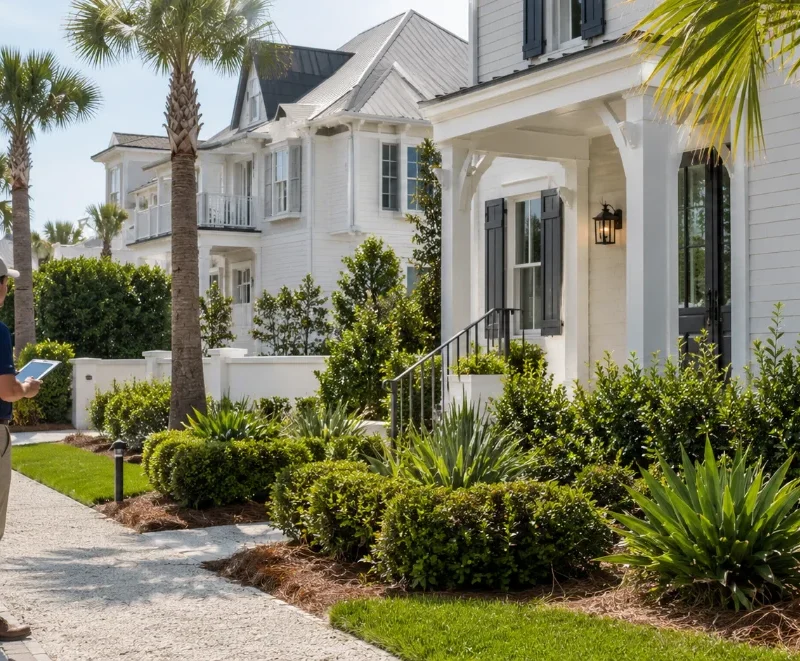
Lawn Care 30A Florida: A Complete Year-Round Guide
A healthy coastal lawn does not happen by accident. Successful lawn care 30A Florida requires the right grass, the right mowing height, careful irrigation, seasonal fertilization, and close attention to pests and disease. The same routine that works inland can fail quickly near Santa Rosa Beach because coastal properties deal with sandy soil, salt exposure, intense summer rain, heat, humidity, and periods of drought.
Homeowners, vacation rental owners, and property managers also need a plan that works when the property is occupied, vacant, or turning over between guests. A dependable schedule keeps the lawn attractive without encouraging excessive growth, wasting water, or creating conditions for fungus and weeds.
This guide explains how to manage warm-season turf throughout the year. It covers mowing, irrigation, fertilizer timing, weed control, pests, fungal disease, and the practical differences between St. Augustinegrass, zoysiagrass, centipedegrass, and bermudagrass along the Emerald Coast.
Why Lawn Care 30A Florida Is Different
Coastal lawns live in an environment that changes quickly. The top few inches of soil may dry out after a windy afternoon, while a heavy storm can saturate the root zone the next day. Sandy soil drains rapidly and holds fewer nutrients than heavier soils, so treatments must be timed carefully.
Salt carried by wind or irrigation water can also stress turf, especially on exposed properties near the Gulf. Foot traffic from guests, beach equipment, pets, and service crews adds another layer of wear. Shade from live oaks, pines, buildings, and privacy landscaping can further reduce turf density. A site-specific lawn care 30A Florida plan accounts for all three pressures before treatments begin.
Effective lawn care 30A Florida begins with understanding the site rather than following a generic calendar. Grass species, sunlight, irrigation coverage, drainage, soil condition, and property use should all shape the maintenance plan.
Choose the Right Grass for the Property
The best grass is not simply the one that looks best in a photo. It is the species that can handle the property’s sun, shade, traffic, irrigation, and maintenance level.
St. Augustinegrass
St. Augustinegrass is common across Northwest Florida because it creates a broad-bladed, dense lawn and performs well in warm conditions. Standard cultivars generally tolerate partial shade better than many other warm-season grasses, but they still need adequate light and consistent care.
St. Augustine grass 30A lawns are vulnerable to chinch bugs, large patch, gray leaf spot, and stress from mowing too low. Standard cultivars are usually healthiest when maintained at approximately 3.5 to 4 inches. Dwarf cultivars may be kept lower, but the cultivar should be confirmed before changing mower height. This cultivar check is a basic part of responsible lawn care 30A Florida.
Zoysiagrass
Zoysiagrass produces a dense, attractive surface and can handle moderate traffic. It often grows more slowly than bermudagrass, which can be helpful for managed residential properties, but the dense canopy can accumulate thatch.
Coarse-textured zoysia cultivars are commonly maintained around 2 inches, while fine-textured cultivars may be kept below 2 inches with suitable equipment. Zoysia should not be scalped, and dull blades can leave the lawn looking brown or torn. Good lawn care 30A Florida adjusts mower setup to the actual cultivar instead of using one height for every yard.
Centipedegrass and Bermudagrass
Centipedegrass can perform in acidic, lower-fertility soils and may suit properties where a lighter maintenance approach is preferred. It does not respond well to excessive fertilizer or heavy traffic.
Bermudagrass thrives in full sun and can recover quickly from wear, but it requires frequent mowing and careful edging. It usually performs poorly in significant shade. For high-visibility properties, the maintenance demand can be much greater than owners expect.
Selecting among the grass types Emerald Coast properties support should happen before fertilizer, irrigation, and mowing decisions are made. A professional site evaluation can prevent years of fighting a grass that is poorly matched to the property.
Correct Mowing Heights and Frequency
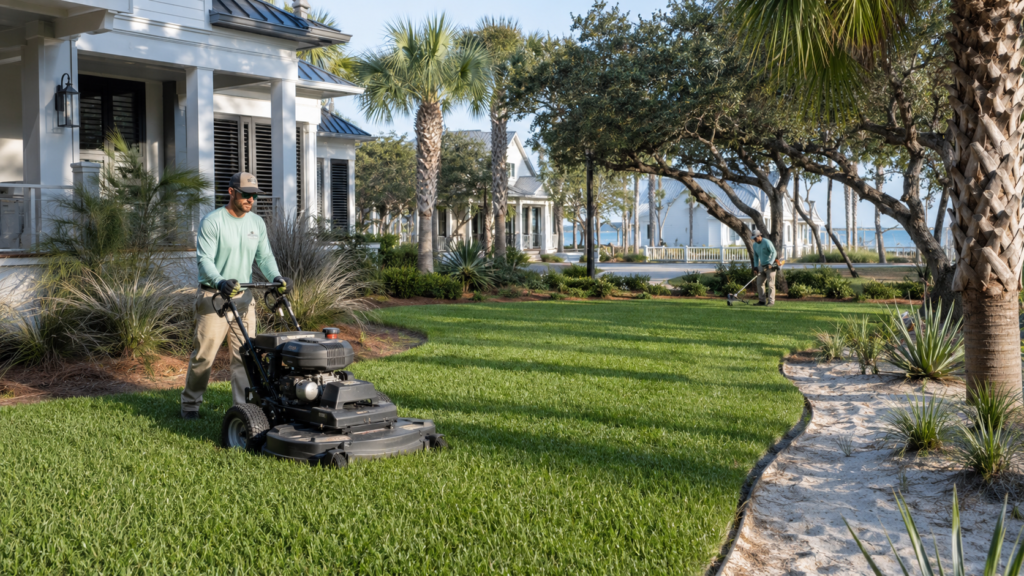
lawn care 30A Florida mowing height for healthy coastal turf
Mowing is one of the most important parts of lawn care 30A Florida because cutting height affects roots, weed pressure, drought tolerance, and disease resistance. Cutting too low removes the leaf area the plant needs for photosynthesis and exposes the soil to sunlight.
For standard St. Augustinegrass, a mowing height of about 3.5 to 4 inches is usually appropriate. Coarse zoysiagrass is often maintained near 2 inches, while fine zoysia may require a lower setting and a mower that can create a clean cut. Centipedegrass is commonly maintained around 1.5 to 2 inches, and bermudagrass may be cut lower when the site and equipment support it.
Use the one-third rule: remove no more than one-third of the grass blade at a single mowing. If a lawn becomes overgrown, reduce it gradually instead of cutting directly to the normal height.
A mowing schedule Florida property owners can rely on must change with growth. Weekly service may be needed during active summer growth, while cooler months may require less frequent mowing. The calendar should never override the actual condition of the turf.
Sharp blades matter. Torn leaf tips lose moisture and can make the lawn look dull or brown. Alternating mowing direction also reduces ruts and helps grass stand more upright. These small mowing details have an outsized effect on lawn care 30A Florida during summer heat.
How Sandy Coastal Soil Changes Every Decision
Sandy soil is one of the defining factors in lawn care 30A Florida. It drains quickly, warms rapidly, and does not hold nutrients as effectively as loam or clay. That creates a narrow margin between too little water and wasteful overwatering.
A soil test is the best starting point before applying lime, phosphorus, or corrective nutrients. Visual symptoms alone can be misleading because irrigation problems, root damage, insects, disease, and nutrient deficiencies may look similar. Testing keeps lawn care 30A Florida decisions tied to actual site conditions.
Organic matter can improve moisture and nutrient retention, but it must be added carefully. Heavy layers placed over existing turf can smother grass or change drainage. Topdressing should be thin, compatible with the soil profile, and applied only when the lawn is actively growing.
Coastal soil also makes split applications useful. Smaller, well-timed treatments can reduce nutrient loss compared with one heavy application. The goal of lawn treatment 30A is steady, healthy growth rather than a sudden flush that demands more mowing and water.
Irrigation for 30A Lawns
Irrigation should replace water the lawn actually needs, not run automatically regardless of weather. Deep, infrequent watering generally encourages stronger roots than daily shallow watering.
Signs of moisture stress include folded leaf blades, a blue-gray appearance, and footprints that remain visible. Watering before severe wilt helps turf recover without keeping the soil constantly wet.
Morning irrigation is usually best because it limits evaporation while allowing the leaf surface to dry during the day. Evening watering can extend leaf wetness and increase conditions favorable for disease. That timing is especially important for lawn care 30A Florida during humid stretches.
Coverage should be tested at least seasonally. Place catch cans across each zone to identify dry spots, overspray, blocked heads, and uneven output. A single broken or misaligned head can create a patch that is repeatedly mistaken for insects or fertilizer deficiency. Seasonal irrigation testing supports more accurate lawn care 30A Florida diagnostics.
For properties needing repairs or coverage corrections, connect this guide to the internal page for irrigation repair. Reliable irrigation is essential to lawn care 30A Florida, but more water is not always the answer.
Seasonal Lawn Fertilization 30A
Fertilizer timing should follow turf growth, local restrictions, product labels, and site conditions. Warm-season grass should not be pushed with nitrogen when it is dormant or under severe stress. A careful lawn care 30A Florida program treats fertilizer as one tool, not the entire strategy.
The University of Florida’s Homeowner Best Management Practices for the Home Lawn emphasizes correct mowing, irrigation, and responsible fertilizer practices as parts of a complete lawn program.
Spring Green-Up
In early spring, wait until the lawn is actively growing before applying a significant nitrogen treatment. A few warm days can create surface color before roots are fully active, so fertilizing too early may encourage weak growth or nutrient loss.
Preemergence weed control may be considered before summer annual weeds germinate, but timing and product selection matter. Avoid combining treatments automatically when the lawn’s needs do not match the product.
Summer Growth
Summer is the most active period for many 30A lawns. Fertilization should support color and density without creating excessive top growth. Heavy nitrogen during periods of constant rain can increase mowing demand and disease pressure. Balanced lawn care 30A Florida avoids chasing dark color at the expense of turf health.
Monitor irrigation and rainfall before every application. Fertilizer should not be applied immediately before a downpour, and granules should be kept off sidewalks, driveways, and storm drains.
Fall Preparation
Fall management should help the lawn enter cooler weather in stable condition. Late-season nitrogen should be used cautiously and in accordance with current local rules and label directions.
Potassium may be appropriate when a soil test or program indicates a need, but it should not be applied simply because winter is approaching. Lawn fertilization 30A should always be based on turf requirements rather than habit.
Weed Control 30A Without Damaging Turf
Weeds are often symptoms of a lawn problem. Thin turf, low mowing, compacted areas, excessive moisture, dry spots, and bare soil all create opportunities for weeds to establish.
A strong lawn is the first layer of weed control 30A. Correct mowing height shades the soil, healthy roots help grass compete, and proper irrigation avoids conditions that favor sedges or drought-tolerant weeds. Preventive lawn care 30A Florida reduces the open space many weeds need to establish.
Preemergence products target weeds before germination and must be applied at the correct time. Postemergence products target existing weeds, but the active ingredient must be safe for the specific grass and appropriate for the temperature.
The UF/IFAS Weed Management Guide for Florida Lawns notes that proper mowing height and frequency are important cultural tools and that weed identification should guide treatment.
Do not treat an unidentified plant with a random product. Some herbicides that are safe on one warm-season grass can injure another. Newly installed sod, heat-stressed turf, and lawns recovering from disease may also need special caution.
Common Pests Along the Emerald Coast
Chinch bugs are a major concern in St. Augustinegrass. Damage may begin as yellowing or irregular brown patches in sunny, dry areas and can spread if populations remain active.
Sod webworms, armyworms, mole crickets, and grubs may also damage turf. The correct response depends on identifying the pest and confirming that insects are present at damaging levels.
Not every brown patch is caused by insects. Drought, poor irrigation coverage, root decline, herbicide injury, disease, and pet urine can produce similar symptoms. Careful lawn care 30A Florida confirms the cause before choosing a pesticide.
A professional lawn maintenance 30A program should inspect before treating. Preventive or calendar-based pesticide use without evidence can waste money, disrupt beneficial organisms, and leave the real problem unresolved.
Fungal Disease and Humidity
Warm temperatures, high humidity, extended leaf wetness, and excessive nitrogen can create favorable conditions for turf disease. Large patch is often associated with cooler, moist conditions in St. Augustinegrass and zoysiagrass, while gray leaf spot may appear during warm, humid periods.
Disease management begins with cultural practices. Avoid unnecessary evening irrigation, improve drainage, mow at the correct height, and do not force rapid growth with excessive fertilizer. Strong lawn care 30A Florida reduces disease pressure before fungicides are considered.
Fungicides can suppress certain diseases, but they do not repair damaged leaves immediately. Recovery depends on the grass producing healthy new growth, so diagnosis and timing are important.
When a patch continues expanding, collect clear photos and seek a professional diagnosis before repeating treatments. Lawn care Santa Rosa Beach properties need often changes after storms, prolonged rain, or sudden temperature shifts.
A Year-Round Lawn Care 30A Florida Calendar
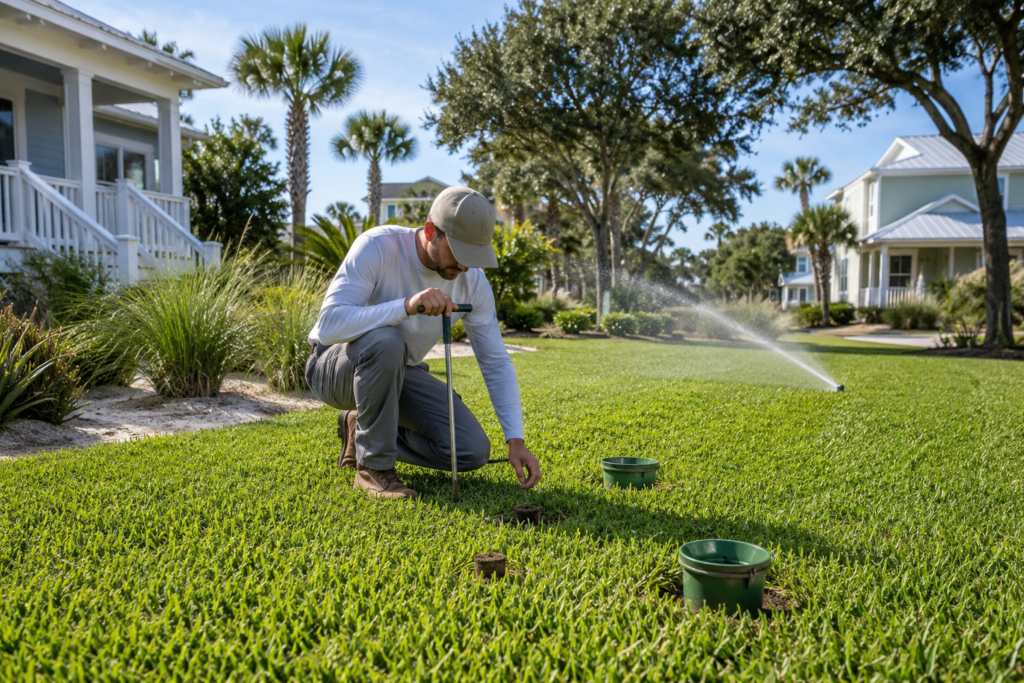
lawn care 30A Florida seasonal plan for irrigation and turf health
A practical calendar should guide inspections and routine work while remaining flexible enough for weather and turf condition.
January Through March
Growth is limited, so mowing is usually less frequent. Remove debris, inspect irrigation, sharpen mower blades, and watch for cool-season weeds and large patch symptoms.
Avoid pushing dormant or slow-growing turf with heavy nitrogen. Plan preemergence timing based on soil temperature, label directions, and the weeds historically present on the property. Winter lawn care 30A Florida is mainly about observation, cleanup, and preparation.
April Through June
As growth becomes consistent, resume the proper mowing frequency and inspect for winter damage. Confirm irrigation coverage before hotter weather arrives.
Begin appropriate fertilization only when the lawn is actively growing. Watch St. Augustinegrass for early chinch bug activity and correct dry zones before assuming insects are responsible. Spring lawn care 30A Florida should rebuild density gradually rather than force rapid growth.
July Through September
This is the fastest-growing and most demanding period. Mow often enough to follow the one-third rule, keep blades sharp, and adjust irrigation for rainfall.
Monitor fungal pressure, webworms, and areas compacted by summer traffic. Avoid unnecessary fertilizer before major storms and keep clippings out of streets and drainage systems. Summer lawn care 30A Florida requires the most frequent observation and adjustment.
October Through December
Growth gradually slows, but turf may remain active well into fall. Reduce mowing frequency according to growth rather than stopping on a fixed date.
Inspect for large patch as temperatures moderate and moisture remains high. Clean equipment, review drainage problems, and document weak areas for spring repair. Fall lawn care 30A Florida should leave the turf stable rather than overly stimulated.
This seasonal approach makes lawn care 30A Florida predictable without pretending every year follows the same weather pattern.
Vacation Rentals and High-Traffic Properties
Vacation rentals face pressures that ordinary residential lawns may not. Guests may park on grass, drag beach gear across narrow paths, move furniture, and use the same access points repeatedly.
Create durable routes from parking areas to entrances, pools, and outdoor showers. Mulch, pavers, stepping stones, or reinforced turf zones may protect areas where grass repeatedly fails.
Service schedules should also consider check-in and check-out times. Mowing early enough to avoid disturbing guests and cleaning hard surfaces afterward creates a better presentation.
Property managers should document irrigation issues, pest activity, and thin areas rather than waiting for a guest complaint. Consistent lawn care 30A Florida protects curb appeal and reduces emergency repairs during peak rental season. A written lawn care 30A Florida service record also helps owners understand recurring problems.
Quick Fixes Versus a Professional Maintenance Plan
Some issues can be handled quickly. A dull mower blade can be sharpened, a blocked irrigation head can be cleaned, and a mowing height can be corrected immediately.
Other problems require a coordinated plan. Repeated fungus, chronic dry spots, heavy weed pressure, declining St. Augustinegrass, and inconsistent color may involve several causes at once.
A professional plan should identify the grass type, measure irrigation coverage, check mowing practices, review soil conditions, and create a seasonal treatment schedule. That integrated approach is what makes professional lawn care 30A Florida more reliable than disconnected treatments. The lawn maintenance service should connect mowing, edging, cleanup, observation, and communication rather than treating each visit as an isolated cut.
For broader design and coastal-property guidance, link this article to the earlier resources on choosing a landscaping company and planning coastal landscaping. A future detailed guide to fertilization can support homeowners who want to understand nutrient timing more deeply.
Build a Healthier Lawn With a Consistent Plan
The best lawn is not the one receiving the most water, fertilizer, or treatments. It is the one receiving the correct work at the correct time.
Successful lawn care 30A Florida depends on matching the grass to the property, mowing at the proper height, irrigating according to need, fertilizing responsibly, identifying weeds and pests accurately, and responding to disease conditions early.
Coastal weather will always create surprises, but a year-round plan makes those surprises easier to manage. Regular observation prevents small issues from becoming expensive repairs.
For a schedule designed around your grass, irrigation, property use, and seasonal conditions, get a lawn maintenance plan from Salty Air Landscaping.
Related posts

Landscaping Near Me 30A: How to Find and Vet a Local Company

Outdoor Property Maintenance 30A: Complete Exterior Care Beyond the Lawn
Storm Prep Landscaping 30A: A Homeowner’s Seasonal Checklist

Builder Landscape Packages 30A: What New Construction Homes Need From Day One
Lawn Fertilization 30A Florida: What Your Sandy Soil Actually Needs