Most homeowners along 30A don’t think about their irrigation system until something goes wrong. And by the time it’s obvious something is wrong — a skyrocketing water bill, a dry patch spreading across the lawn, a soggy corner that never dries out — the problem has usually been developing for weeks, sometimes longer.
Irrigation repair in 30A is one of the most requested services we handle at Salty Air Landscaping & Maintenance, and it’s easy to see why. The coastal environment here is hard on irrigation components. Salty, humid air corrodes fittings and valve internals faster than inland conditions. Sandy soil creates uneven water distribution that makes it difficult to tell from the surface whether a zone is running correctly. And many irrigation systems along the Emerald Coast haven’t been properly serviced in years — sometimes since installation.
This guide covers the most common signs that your 30A irrigation system needs attention, what typically causes problems in coastal conditions, and why getting a local expert involved early saves you money, water, and lawn damage.
Why Irrigation Repair in 30A Is More Urgent Than Most Homeowners Realize
Irrigation systems in coastal Northwest Florida face a different set of stressors than systems in other parts of the state. Understanding what accelerates wear and failure here explains why regular maintenance and timely repairs matter more than most homeowners think.
Salt Air Corrodes Components Over Time
The same salt air that stresses your plants works on metal and plastic irrigation components too. Valve solenoids, brass fittings, and exposed metal components in spray heads and rotors are all vulnerable to salt-accelerated corrosion. In high-exposure coastal zones — properties within a few blocks of the Gulf in areas like Blue Mountain Beach, Grayton Beach, or Seagrove Beach — component degradation happens noticeably faster than manufacturer timelines assume.
Corroded solenoid valves are among the most common failures we find during inspections on 30A properties. A valve stuck open overirrigates one zone continuously without the controller knowing — driving up water bills and creating the soggy, fungus-prone conditions that damage turf over time.
Sandy Soil Creates Hidden Distribution Problems
30A’s fast-draining sandy soil affects irrigation performance in a counterintuitive way: water that looks evenly distributed on the surface is often moving laterally before it reaches root depth, creating dry zones that don’t correspond to the coverage pattern you’d expect. This means a system can appear to be functioning correctly — all heads rotating, all zones running — while sections of turf are quietly going dry.
The fix usually involves adjusting precipitation rates, recalibrating run times using a cycle-and-soak approach, and sometimes repositioning heads to match actual distribution in sandy conditions rather than the manufacturer’s rated coverage radius.
Tree Roots, Construction, and Physical Damage
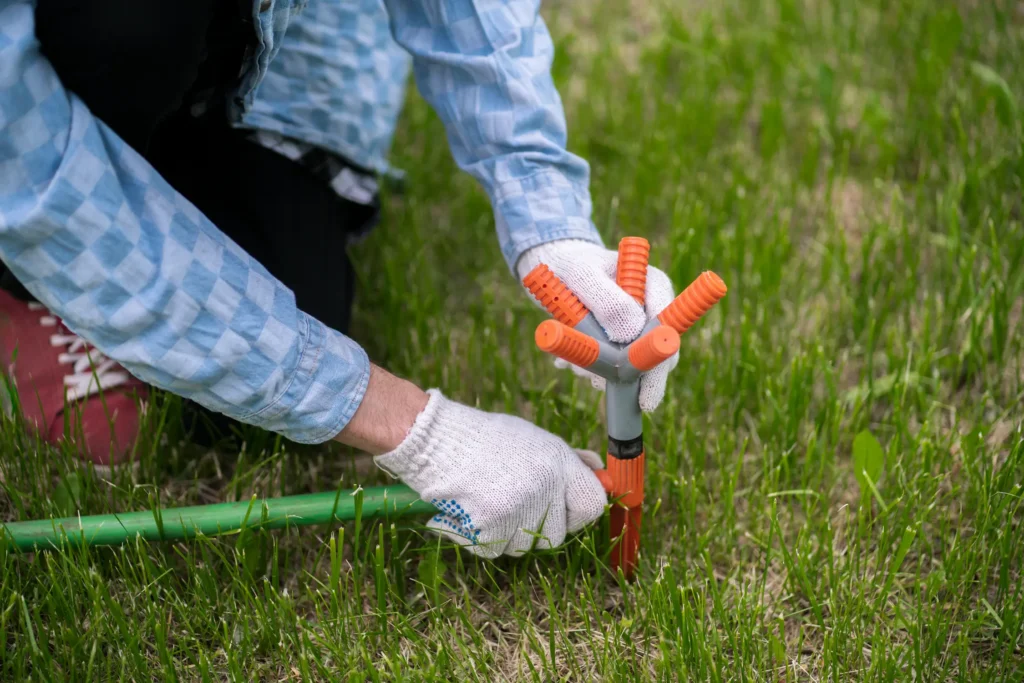
Lateral lines — the pipes running from the valve manifold to individual sprinkler heads — are the most frequently damaged component in established 30A landscapes. Mature tree root growth cracks and displaces PVC lines over time. Landscaping renovations, bed work, and general property maintenance can nick or break lines without anyone realizing it immediately. In communities with nearby new construction, vibration and ground disturbance add to the risk.
A cracked lateral line typically shows up as one zone that pressurizes but delivers poor coverage — some heads perform fine while others barely pop up — combined with wetter-than-expected soil along the line path.
Controllers That Have Never Been Optimized
One of the most consistently overlooked irrigation problems on 30A properties — especially vacation rentals and second homes — is a controller still running a schedule from installation, or one that’s never been adjusted for seasonal changes. Florida’s water management districts require seasonal schedule adjustments, and irrigation run times should change meaningfully between peak summer demand and winter reduced-need periods.
A controller running a summer schedule through winter doesn’t just waste water — it creates the overwatered conditions that invite brown patch fungus and root rot in St. Augustine turf during cooler, less-evaporative months.
7 Signs You Need Irrigation Repair in 30A Right Now
Most irrigation problems announce themselves clearly if you know what to look for. Here are the most common indicators we see on Emerald Coast properties.
1. Your Water Bill Has Gone Up Without Explanation
A sudden or gradual increase in your water bill without any change in household usage is one of the clearest indicators of an irrigation leak. A single cracked lateral line — even leaking slowly — can add hundreds of gallons to your monthly usage. For vacation rental owners reviewing bills remotely, an unexplained spike is often the first signal that irrigation repair in 30A is overdue.
2. Dry Patches That Don’t Respond to Rain or Irrigation
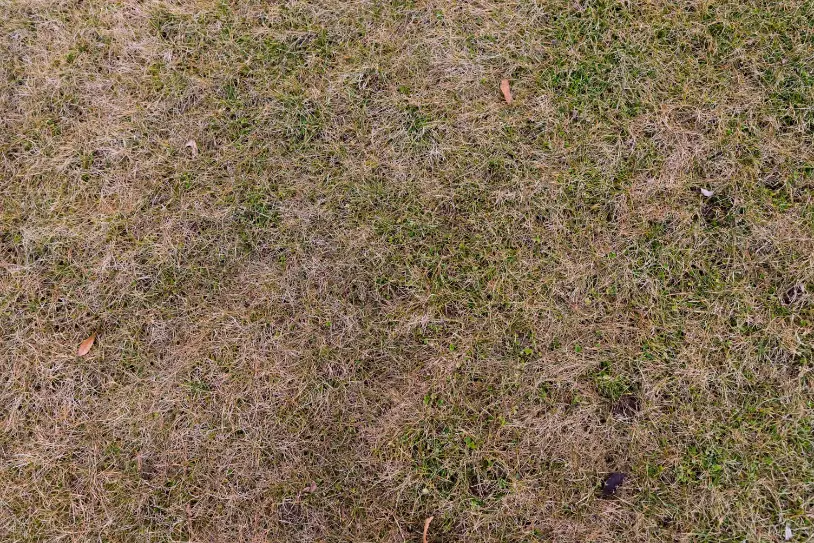
Persistent dry patches in an otherwise healthy lawn usually indicate a coverage gap — a head that’s stopped rotating, a clogged nozzle, a zone pressurizing weakly, or a lateral line break reducing flow to a section. These patches often get attributed to disease or soil problems first, but an irrigation check should always be the starting point.
3. One Area of Your Yard Is Always Wet or Soggy
A consistently wet or soft area — especially one that doesn’t drain after rain — often indicates a valve stuck open, a zone running longer than programmed, or a lateral line leak saturating the soil below the surface. Soggy areas are the ideal environment for brown patch fungus and other soil-borne turf diseases common along the Gulf Coast.
4. Sprinkler Heads That Don’t Pop Up, Don’t Rotate, or Spray Sideways
Individual head failures are common in mature irrigation systems. Worn wiper seals allow heads to rise partially but not fully. Rotor turbines clog with sand and debris. Nozzles become misaligned, cracked, or blocked. Each reduces zone coverage — and because individual head failures are gradual, they’re easy to miss until dry patches are already visible in the turf.
5. You Hear the System Running When It Shouldn’t
If you can hear an irrigation zone running outside its scheduled window — or notice water running from heads at an unexpected time — a valve is likely stuck open or a wiring issue is triggering zones unintentionally. Both waste significant water and can cause overwatering damage that’s expensive to reverse.
6. Low Pressure Across One or More Zones
Zones running at noticeably lower pressure than others — heads that barely pop up, rotors moving sluggishly, spray patterns falling short of rated coverage — often indicate a partially closed valve, a pressure regulator issue, or a line break reducing flow. In sandy soil, the coverage deficit from a low-pressure zone translates directly to dry turf within a few weeks.
7. Your System Hasn’t Been Serviced in Over a Year
This one doesn’t show up as a visible symptom — but if your irrigation system hasn’t had a full inspection in the past twelve months, there’s a reasonable chance it’s underperforming without any dramatic failure to flag it. Annual inspections catch gradual degradation — worn nozzles, slow leaks, shifting heads, controller drift — before it accumulates into real turf damage or a water bill surprise.
What a Professional Irrigation Inspection Covers
When Salty Air performs an irrigation service on a 30A property, here’s what we assess systematically across the entire system.
- Controller audit — review current schedule, update for season, check zone run times against soil type and current evapotranspiration rates
- Zone-by-zone run test — activate each zone individually and observe head performance, spray patterns, rotation, pressure, and coverage gaps
- Head inspection — check all spray heads and rotors for proper pop-up height, rotation function, nozzle condition, and alignment
- Valve inspection — test all zone valves for proper open/close function; check solenoids for corrosion and electrical continuity
- Lateral line assessment — identify areas suggesting underground leaks based on soil moisture patterns, pressure differentials, or visible wet spots
- Backflow preventer check — verify the backflow prevention device is functioning and compliant with local water management requirements
- Coverage mapping — identify gaps relative to turf and bed areas; recommend head additions, repositioning, or nozzle upgrades where needed
- Repair and adjustment — fix identified issues on-site where possible; document and schedule any work requiring parts sourcing or additional crew
Seasonal Irrigation Maintenance: Keeping Your System Running All Year
Beyond reactive repairs, a seasonal approach keeps your system running efficiently and prevents small problems from compounding into expensive ones.
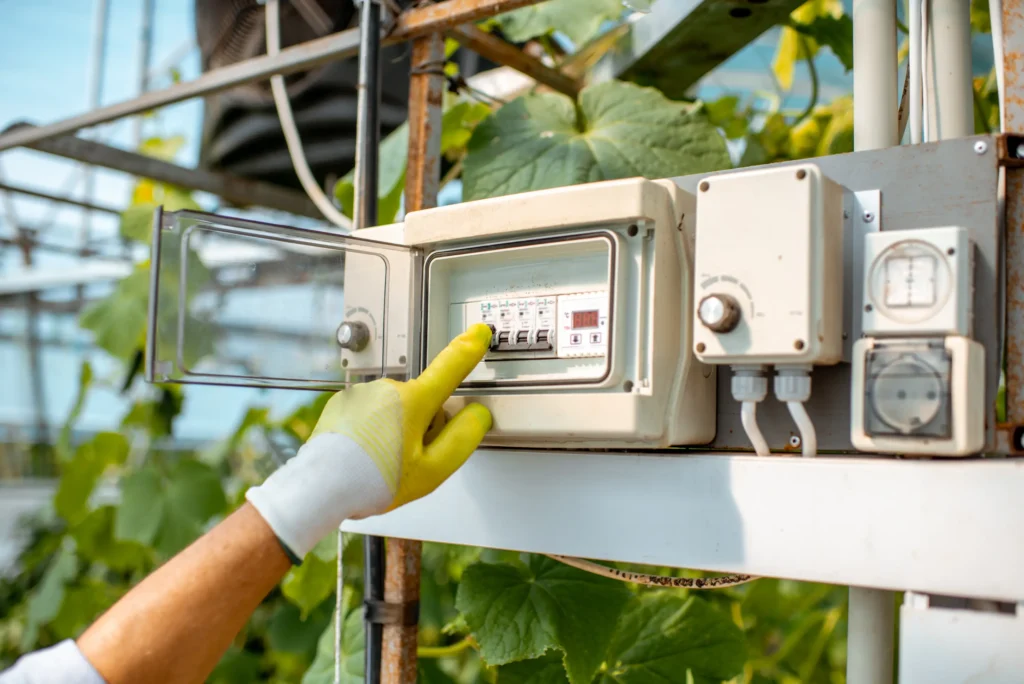
Spring Startup: Irrigation Repair in 30A Before Peak Season
- Inspect all heads and rotors after winter dormancy period
- Update controller schedule from winter to spring/summer program
- Check and flush filter screens on drip zones and heads
- Verify backflow preventer operation
- Run full zone test and document any issues before peak season demand
Summer Monitoring (May – September)
- Adjust controller schedule as rainy season begins — avoid overwatering during Florida’s summer rain pattern
- Inspect heads monthly in high-use periods — sandy soil and lawn care activity dislodge heads more frequently
- Monitor water bills monthly — a sudden increase warrants an immediate inspection
- Check for fungal activity in turf that may indicate overwatering in specific zones
Fall Adjustment (October – November)
- Reduce run times as temperatures drop and evapotranspiration decreases
- Transition to fall/winter schedule on controller
- Inspect heads for any damage from summer lawn care activity
- Check valve solenoids for corrosion — end of season is a good time to replace aging components before winter
Winter Readiness (December – February)
- Prepare system for freeze events — Northwest Florida does see occasional hard freezes that crack exposed components
- Drain or insulate any above-ground components during freeze warnings
- Reduce watering frequency to match reduced plant water demand — most turf along 30A needs minimal supplemental irrigation November through February
- Use the quieter winter period for larger repairs or system upgrades before spring startup
Water Restrictions on the Emerald Coast: Stay Compliant
The Northwest Florida Water Management District (NWFWMD) enforces irrigation restrictions across the Emerald Coast that many homeowners aren’t fully aware of until they receive a notice. Current restrictions generally limit landscape irrigation to specific days based on property address (odd/even scheduling) and prohibit irrigation between 10 a.m. and 4 p.m. to reduce evaporation losses.
HOA communities along 30A may have additional restrictions layered on top of district rules. During drought periods or declared water shortage phases, the district can implement more restrictive emergency schedules with limited notice.
You can review current watering restrictions and seasonal schedules directly on the Northwest Florida Water Management District website Getting your controller programmed to a compliant schedule during a service call is the easiest way to stay on the right side of the rules and avoid fines.
Irrigation Efficiency and Florida-Friendly Landscaping
Properly calibrated irrigation repair in 30A isn’t just about fixing broken components — it’s about running your system as efficiently as possible for the coastal soil and climate conditions you’re working with. The University of Florida’s Institute of Food and Agricultural Sciences (UF/IFAS) publishes detailed guidance on irrigation scheduling, system efficiency, and water conservation practices specific to Florida landscapes.
Their Florida-Friendly Landscaping irrigation guidance covers scheduling principles that apply directly to 30A’s sandy soil and subtropical climate. Combining local service expertise with research-backed scheduling practices is how we approach every irrigation repair and calibration job on the Emerald Coast.
Irrigation Repair Across 30A and the Emerald Coast
Salty Air Landscaping & Maintenance handles irrigation repair and maintenance throughout the 30A corridor and surrounding areas. We work on residential properties, vacation rentals, HOA-managed communities, and commercial landscaping accounts across:
- Santa Rosa Beach and the full 30A corridor — Seaside, Rosemary Beach, Alys Beach, WaterColor, Seagrove Beach, Grayton Beach, Blue Mountain Beach, Inlet Beach
- Sandestin and Miramar Beach
- Panama City Beach
- Niceville and Freeport
When homeowners across the Emerald Coast search for irrigation repair in 30A, they need a company that understands coastal wear patterns, sandy soil drainage behavior, and the HOA compliance requirements of their specific community. That’s exactly what we bring to every job.
Frequently Asked Questions
1. Why is my water bill so high even though I haven’t changed my irrigation schedule?
An unexplained increase in your water bill almost always points to an irrigation leak or a stuck-open valve. A cracked lateral line, a leaking valve that won’t fully close, or a continuously running zone can add hundreds of gallons to your monthly usage without any visible surface sign. An irrigation inspection is the fastest way to identify and fix the source. In many cases, the repair cost is recovered within the first one or two billing cycles after the fix.
2. How often should irrigation systems in 30A be professionally serviced?
At minimum, once per year — ideally at spring startup before peak season demand begins. Properties in high-salt-exposure coastal zones, vacation rentals without regular on-site oversight, or systems more than five years old benefit from twice-yearly inspections. The combination of coastal corrosion, sandy soil distribution issues, and seasonal schedule changes makes annual service a genuinely practical step.
3. Can you repair irrigation systems you didn’t install?
Yes. We assess and repair irrigation systems regardless of who installed them or how old they are. Most residential systems along 30A use standard components — Hunter, Rain Bird, Toro — that we’re familiar with and carry parts for. If an older system has components that are difficult to source, or a design that creates ongoing problems, we’ll tell you directly and discuss whether a targeted upgrade makes more practical sense than continuing to repair aging infrastructure.
4. What are the irrigation watering restrictions in 30A and Santa Rosa Beach?
The Northwest Florida Water Management District currently restricts landscape irrigation to designated days based on address (odd/even) and prohibits watering between 10 a.m. and 4 p.m. Specific schedules and any current drought phase restrictions should be verified directly at nwfwater.com, as these can be updated. Many HOA communities along 30A have additional restrictions. Getting your controller programmed during a service call is the easiest way to ensure compliance.
5. Do you handle sprinkler repair for vacation rental properties managed remotely?
Yes, and it’s a meaningful part of what we do. For absentee owners, we check irrigation system function during every maintenance visit, document any issues found, and communicate directly with owners before water waste or turf damage compounds. We can also set up spring startup inspections and seasonal controller updates on a scheduled basis so you’re not relying on a water bill spike to alert you to a problem. Reach out through saltyairco.com to set up a service plan.
Need Irrigation Repair in 30A? Let’s Fix It Fast.
A broken sprinkler head or a leaking valve isn’t just an inconvenience. Left unaddressed, it costs you water, damages your lawn, and creates the conditions for more expensive problems down the road.
Salty Air Landscaping & Maintenance provides irrigation repair and maintenance throughout 30A, Santa Rosa Beach, Sandestin, Panama City Beach, Niceville, Freeport, and the broader Emerald Coast.
If your system hasn’t been serviced in over a year — or you’re already seeing the signs of a problem — visit saltyairco.com to schedule a service visit. We’ll assess the full system, handle repairs on-site where possible, and leave you with a clear picture of what your irrigation is actually doing.
Related posts

Landscaping Near Me 30A: How to Find and Vet a Local Company

Outdoor Property Maintenance 30A: Complete Exterior Care Beyond the Lawn
Storm Prep Landscaping 30A: A Homeowner’s Seasonal Checklist

Builder Landscape Packages 30A: What New Construction Homes Need From Day One
Lawn Fertilization 30A Florida: What Your Sandy Soil Actually Needs